
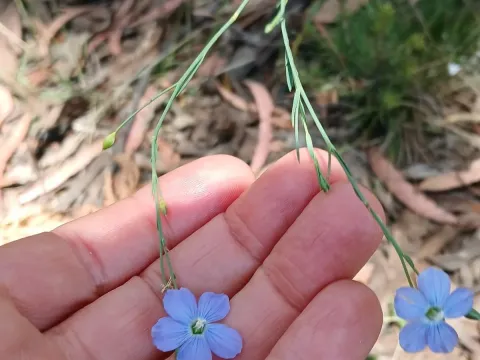
Marginal flax
Linum marginale
Marginal flax, known scientifically as Linum marginale, is a perennial herbaceous plant belonging to the Linaceae family. Native to Australia, it is a hardy species that has evolved to thrive in diverse environments, ranging from open grasslands to woodland edges, demonstrating significant adaptability.
What the section contains
Marginal flax
The plant features slender, erect stems that typically grow between 30 and 60 centimeters in height. Its narrow, alternate leaves are arranged along the stems, providing a delicate appearance while supporting efficient photosynthesis throughout its extended growing season.
During its flowering phase, which usually occurs from spring to mid-summer, the plant produces distinctive five-petaled blue flowers. These blooms are not only aesthetically pleasing but also vital for attracting pollinators, which play a crucial role in the seed production and reproductive success of the population.
Unlike common annual flax varieties, Linum marginale possesses a robust root system capable of sustaining the plant through multiple seasons. This perennial nature makes it a subject of interest for both botanical research and agricultural development in regions with similar climatic conditions.
In terms of agricultural significance, this species represents a genetic resource for breeding programs aiming to increase resilience in cultivated flax. Its natural survival strategies in varying environments provide valuable insights into water-use efficiency and drought tolerance mechanisms.
For optimal growth, marginal flax requires well-drained soils, ideally of a sandy or light loamy texture. Proper drainage is essential, as the species is highly susceptible to root rot if exposed to waterlogged conditions, particularly in heavier soil types with poor aeration.
The plant thrives in full sun, which is necessary to maintain its structural integrity and prevent stunted flowering. Exposure to direct sunlight for most of the day ensures that stems remain upright and that the plant develops the vigor required for long-term survival as a perennial crop.
Climatic preferences for Linum marginale include mild to warm conditions. It is well-adapted to the variable weather patterns of its native range, including periods of heat, provided there is adequate soil moisture to support its physiological processes during intense summer warmth.
Irrigation should be managed carefully, favoring light, consistent moisture over saturation. In agricultural settings, drip irrigation is recommended to supply water directly to the root zone, thereby reducing the risk of foliage diseases caused by constant surface wetness.
Cultivation practices must include diligent weed control, especially during the establishment phase. As a perennial plant, it needs a clean growing space to develop its root architecture, ensuring it can effectively compete for nutrients and water in the subsequent years of its growth cycle.
The primary threats to Linum marginale include fungal pathogens such as Fusarium wilt and flax rust. These diseases can quickly decimate a crop if environmental conditions, such as high humidity and poor ventilation, favor the rapid spread of fungal spores across the field.
Insect pests, including weevils and the flax flea beetle, are known to target young plants, often causing significant damage to the foliage and apical meristems. Early detection through regular field scouting is critical for implementing timely control measures before the infestation becomes severe.
Pathogen development is often exacerbated by poor sanitation and the buildup of infected plant debris in the soil. Farmers should adhere to strict crop rotation schedules, ensuring that the field remains free of flax species for several years to break the lifecycle of soil-borne diseases.
Chemical control, when necessary, should be applied with precision to minimize the impact on non-target beneficial insects, particularly bees. Integrated Pest Management (IPM) strategies, which prioritize cultural and biological controls, are highly recommended for the sustainable production of marginal flax.
Ultimately, the prevention of threats begins with the selection of high-quality, certified seeds and the maintenance of a healthy soil ecosystem. By promoting overall plant vigor through balanced nutrition and proper drainage, growers can significantly reduce the vulnerability of the crop to environmental stresses.