
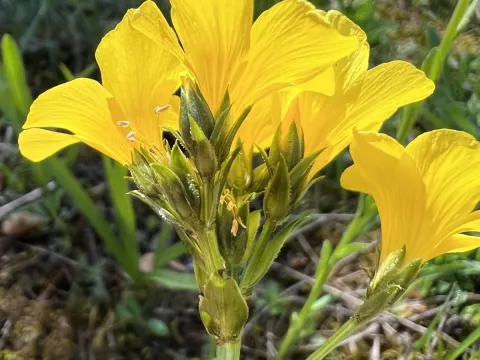
Linum capitatum
Linum capitatum
Linum capitatum is a perennial herbaceous plant belonging to the Linaceae family. It is native to the rocky and mountainous regions of Southeastern Europe, where it has evolved to thrive in nutrient-poor and well-draining limestone soils.
What the section contains
Linum capitatum
The plant is characterized by its distinct habit: it features upright stems that typically reach 20–40 cm in height, terminating in dense, capitate inflorescences composed of vibrant yellow flowers, which is a unique trait compared to the more common blue-flowered flax varieties.
For successful growth, Linum capitatum requires full sun exposure and excellent soil drainage. It is highly intolerant of waterlogged conditions, making it unsuitable for heavy clay soils unless significant drainage modifications are implemented.
Climatic requirements are focused on stability and light intensity. It excels in regions with warm, dry summers and can withstand significant periods of drought once the root system is fully established, thanks to its deep taproot.
In terms of agricultural and horticultural use, this species is primarily valued as an ornamental crop for rock gardens and xeriscaping. Its ability to tolerate low-nutrient substrates makes it an excellent choice for stabilizing rocky embankments while providing aesthetic value.
The most common disease threat to Linum capitatum is fungal root rot, which occurs when the soil moisture levels are consistently too high, often exacerbated by poor air circulation around the crown of the plant.
Insect pests include the flax flea beetle, which poses a significant threat to young seedlings and can severely stunt the growth of mature plants if left unmanaged during the early vegetation phase.
Fungal leaf spot diseases may also arise in humid conditions, requiring proper spacing between plants to ensure that foliage dries quickly after rainfall or irrigation.
Integrated pest management strategies for this culture involve maintaining optimal spacing, using gravel mulching to keep the root collar dry, and applying targeted insecticides only when thresholds are exceeded.
Routine inspections for signs of wilt or discoloration are essential to catch diseases early, as many pathogens in flax species spread rapidly through soil and water contact.