
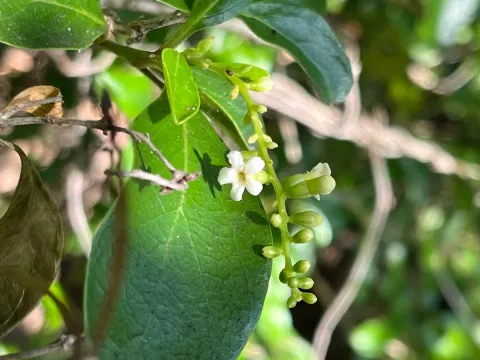
Florida fiddlewood
Citharexylum fruticosum
Florida fiddlewood (Citharexylum fruticosum) belongs to the Verbenaceae family. It is a large, evergreen shrub or small tree native to tropical regions of the Caribbean and Florida, known for its elegant habit.
What the section contains
Florida fiddlewood
Botanically, it features leathery, opposite leaves and racemes of small, fragrant white flowers that appear throughout the year. Its structure allows it to function as both a shade tree and a screening hedge.
The plant thrives in full sun to partial shade and requires a warm climate. It is highly sensitive to freezing temperatures, making it suitable only for zones where frost is extremely rare or non-existent.
Soil requirements are relatively flexible; however, it grows best in well-drained, fertile soil. Once established, it possesses a moderate tolerance to drought, although consistent moisture ensures better growth.
In landscaping, it is used for its ecological benefits. Its fruits are an important food source for local bird populations, and its flowers provide essential nectar for butterflies and other pollinators.
Common pests include scale insects and mealybugs, which can cause leaf drop and stunted growth. Periodic monitoring and horticultural oil treatments are usually effective in maintaining plant health.
Root rot is a significant risk in heavy, waterlogged soils. To prevent this, ensure that planting sites have excellent drainage and avoid over-irrigation during high rainfall seasons.
Leaf spot diseases may occur during humid conditions. Maintaining proper spacing between plants helps increase airflow, which reduces the incidence of fungal pathogens settling on the foliage.
Borers occasionally target stressed wood, making plant vigor a priority. Proper fertilization and routine pruning of dead or damaged branches are essential for preventing these infestations.
Integrated pest management strategies are recommended to protect beneficial insects visiting the flowers. Always choose selective pesticides when controlling outbreaks of sap-sucking pests.