
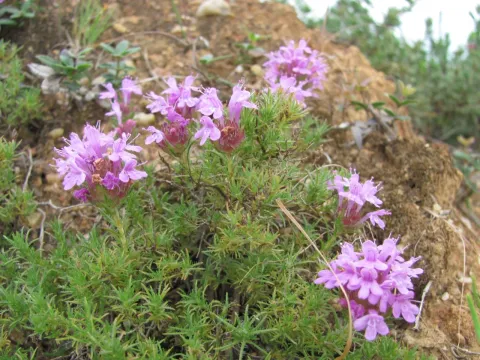
Hairy thyme
Thymus villosus
Hairy thyme (Thymus villosus) is a perennial subshrub belonging to the Lamiaceae family. It is distinct due to the dense covering of fine hairs on its foliage, which helps the plant retain moisture in arid environments.
What the section contains
Hairy thyme
The sowing process requires well-prepared, loose soil. Seeds are extremely fine and should be sown on the surface with minimal covering to ensure adequate light exposure, which is necessary for germination.
In commercial agriculture, greenhouse propagation followed by transplantation into open fields is a common strategy to ensure consistent plant density and uniform growth across the plantation.
Sowing in open fields is typically scheduled for mid-spring. Adequate spacing is essential, with row distances usually set between 45 and 60 cm to facilitate equipment movement and manual weeding tasks.
Early stage development is characterized by slow initial growth. Ensuring a weed-free seedbed during the first few months is critical to prevent the young plants from being outcompeted by aggressive weeds.
Thymus villosus thrives in full sunlight. High light intensity is the primary driver for the synthesis of essential oils, making the choice of location paramount for producing high-quality aromatic herb products.
The plant prefers well-drained, sandy or gravelly soils with a neutral to slightly alkaline pH. Drainage is non-negotiable; waterlogging for even short periods can lead to root system failure and plant death.
As a drought-tolerant species, hairy thyme does not require frequent irrigation once established. However, for maximum biomass production, supplemental irrigation during dry spells is recommended to prevent growth stagnation.
Fertilization should be managed carefully. Excessive nitrogen can cause rapid, succulent growth that is more susceptible to winter frost and disease, whereas phosphorus and potassium promote stronger, woodier stems.
Cold hardiness is generally sufficient for temperate climates. In colder zones, the plant benefits from a light layer of mulch to protect the crown from frost heaving during freeze-thaw cycles in winter.
Fungal pathogens such as root rot and powdery mildew are the most significant threats to thyme crops, particularly in regions with high humidity or poor soil drainage characteristics.
Pests like aphids and spider mites can colonize the dense foliage. Integrated pest management strategies, focusing on biological controls and timely scouting, are preferred over broad-spectrum chemical interventions.
Maintaining a strict crop rotation program is essential to reduce the risk of soil-borne pathogens. Planting thyme in fields previously used for other Lamiaceae crops should be avoided to prevent common disease recurrence.
Weed management remains the most labor-intensive part of thyme production. Utilizing organic mulch helps reduce weed pressure while simultaneously improving the soil moisture holding capacity.
Harvesting should be done under dry conditions to minimize the risk of post-harvest rot. Rapid drying of the harvested biomass is crucial to maintain the quality of the essential oils and prevent microbial contamination.