
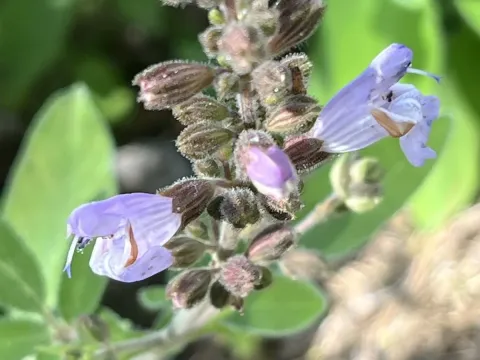
Greek sage
Salvia fruticosa
Greek sage (Salvia fruticosa) is a perennial subshrub belonging to the Lamiaceae family. For commercial cultivation, starting plants in trays or greenhouse conditions is recommended to ensure uniform crop establishment.
What the section contains
Greek sage
Seeds are typically sown in early spring in a well-drained, sterile substrate. Optimal germination requires a warm environment with soil temperatures between +20 °C and +22 °C.
Seedlings should be hardened off for approximately two weeks before being transplanted into the field. This process helps the young plants acclimatize to outdoor conditions and reduces transplant shock.
When planting in the field, space rows about 60–70 cm apart, with 30–40 cm between individual plants. This spacing is crucial for airflow, which reduces the incidence of fungal pathogens.
Vegetative propagation via cuttings is also a common practice. This method ensures the uniformity of the crop, as the progeny will be genetically identical to the parent, preserving desirable essential oil profiles.
Greek sage is a heliophilic (sun-loving) plant that thrives in open locations with full sun exposure. It is highly drought-tolerant, making it well-suited for arid or semi-arid climates.
Soil requirements focus on excellent drainage. Sandy or loamy soils are ideal; however, the plant can adapt to various soil textures provided they do not hold excessive moisture.
The ideal pH range for this species is neutral, specifically between 6.5 and 7.5. Alkaline soils are generally well-tolerated, while very acidic soils should be amended with lime.
While the plant is hardy, it requires protection from waterlogging. Raised beds or sloping land are preferred planting sites to prevent root rot during rainy seasons.
Maintenance involves periodic weeding and soil cultivation to maintain aeration. Once established, Greek sage requires minimal fertilization, as high nutrient levels can actually decrease the quality and aromatic concentration of the leaves.
Yields of Greek sage are cumulative, with production levels increasing significantly as the plant matures into its second and third year of growth.
Harvesting for essential oil production or dried culinary herbs should be timed precisely with the onset of the flowering stage, as this is when active compound concentration peaks.
Proper density and field management are critical for maximizing dry mass yield per hectare. Farmers focus on maintaining vigorous, healthy shrubs that produce high-quality foliage.
The crop is highly valued in the essential oil industry and the pharmaceutical sector due to its therapeutic properties and unique terpene profile.
Strategic management of harvest intervals allows for multiple cuttings per season in warmer climates, though one major harvest is standard for temperate production systems.
Excessive humidity is the primary enemy of Greek sage. High moisture levels often lead to root rot and other soil-borne diseases that can devastate a field in a short time.
Powdery mildew is a common fungal threat, typically appearing during periods of high humidity and poor air circulation. Effective prevention includes proper row spacing and thinning.
Pests such as spider mites and aphids can infest the plants, particularly under stressed conditions. Integrated Pest Management (IPM) using biological controls is highly recommended.
Field hygiene is essential; removing weeds and diseased plant debris prevents the spread of pathogens. Rotation is also necessary to keep the soil pathogen-free.
Chemical intervention should be kept to a minimum to ensure the final product meets safety standards for medicinal and culinary use.
Harvesting is performed by cutting the stems about 10–15 cm above the soil surface. This height ensures the plant retains enough vegetative buds to regenerate in the following season.
Harvesting during the driest part of the day is crucial to minimize moisture in the harvested biomass, which helps prevent fermentation during transportation to the drying facility.
Drying must take place immediately after harvest. Temperature-controlled drying at or below +40 °C preserves the volatile organic compounds that constitute the essential oil.
Dried leaves are then separated from the woody stems, cleaned, and stored in airtight containers away from direct light to maintain potency and aroma.
Periodic harvesting is a form of pruning that encourages the plant to become bushier, ultimately leading to higher yields in subsequent harvests.