
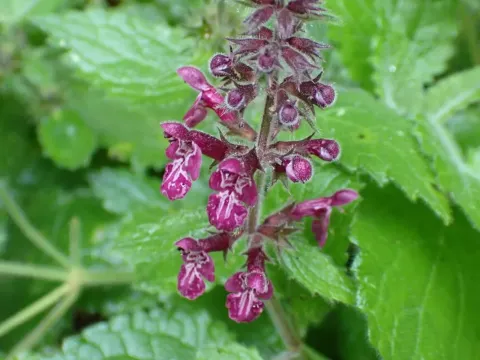
Hedge woundwort
Stachys sylvatica
Hedge woundwort (Stachys sylvatica) is a perennial herbaceous plant belonging to the Lamiaceae family. It is characterized by its rhizomatous root system and upright growth habit.
What the section contains
Hedge woundwort
When cultivating this species, seeds should be sown in autumn or early spring, as they often require a period of cold stratification to ensure uniform germination rates.
Seeds need to be sown shallowly, as they are light-dependent for successful germination. A fine, well-prepared seedbed with moist soil is essential for the initial establishment phase.
Propagation can also be achieved through division of the root clumps during the dormant season, which allows for faster establishment of new plantings compared to seed sowing.
When sowing in rows, spacing should be approximately 50 centimeters apart to allow sufficient airflow, preventing the development of fungal pathogens during the growth season.
This crop thrives in partial shade and moist conditions, reflecting its natural forest edge habitat. It is highly sensitive to extreme heat and direct, harsh sunlight.
Soil requirements include rich, well-draining, and fertile loam or organic-rich substrates. The soil pH should ideally range from slightly acidic to neutral for optimal nutrient uptake.
Consistent moisture is a key factor in successful cultivation. Irrigation should be managed to keep the soil consistently damp but never waterlogged to avoid root rot issues.
The species is quite hardy and adapts well to temperate climates, showing significant resilience to winter frost when planted in protected or naturalised environments.
Regular mulching is recommended to help retain soil moisture and regulate soil temperature, especially during the peak of the summer months when heat stress is most likely.
The yield of Hedge woundwort is primarily based on the dry weight of the aerial parts harvested during the peak flowering period for pharmacological use.
Optimal yields are achieved on established plants from their second year onwards, provided that proper fertilization and weed management practices are strictly followed.
The productivity is heavily influenced by the soil moisture levels and the nutrient content of the planting site, necessitating periodic organic amendments.
Managing the plant density and ensuring sufficient space for root development are critical factors that contribute to the overall biomass production per hectare.
Yield stability is maintained by selective pruning of non-productive or damaged stems, which encourages the plant to direct energy toward healthier vegetative growth.
Powdery mildew is a common threat, especially in humid and stagnant air conditions, often requiring careful site selection and spacing to minimize the risk of infection.
Aphids are frequent pests that attack the tender new growth, causing leaf curling and potential stunted development if not controlled during the early infestation stages.
Root rot caused by Phytophthora or Pythium species is a significant risk in poorly drained soils, often resulting in total crop loss if conditions remain anaerobic.
Integrated pest management strategies are recommended, utilizing natural predators or biological controls to protect the medicinal quality of the harvested biomass.
Regular inspection of the crop for signs of leaf-eating insects or discolored foliage allows for early intervention, preserving the health of the entire medicinal crop.
The harvest period is strictly determined by the phenological stage of the plant, specifically targeting the time of full bloom when essential compounds are highest.
Harvesting involves cutting the upper 20–30 centimeters of the flowering stems, ensuring that the material is free from woody parts or ground debris.
Immediate post-harvest processing is required, where the material is spread out to dry in well-ventilated, shaded areas to maintain the natural color and potency.
Temperatures during the drying process must be strictly monitored to remain below 40 degrees Celsius to prevent the degradation of heat-sensitive active constituents.
Final storage requires moisture-proof packaging kept in a cool, dark warehouse to preserve the therapeutic properties of the dried herb for future medicinal use.