
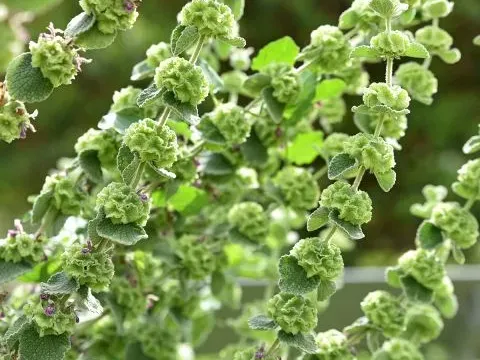
Hairy horehound
Ballota hirsuta
Sowing of Hairy Horehound seeds is typically performed in the early spring, once the danger of severe frost has passed and the soil has reached an optimal temperature of at least 10–12 degrees Celsius.
What the section contains
Hairy horehound
Seeds are sown at a shallow depth of approximately 1 centimeter, as they require sufficient exposure to light for germination. Maintaining consistent soil moisture during the germination phase is critical for successful crop establishment.
For professional farming, precision seeding at a spacing of 40–50 centimeters between rows facilitates easier mechanized weeding and harvesting throughout the growing cycle.
Propagation can also be achieved through cuttings or root division in early autumn, which provides a more reliable success rate for expanding plant populations in garden settings.
Establishing a nursery plot for seedlings before transplanting into the open field is a recommended practice to ensure high plant vigor and uniformity across the production area.
Ballota hirsuta, a member of the Lamiaceae family, is well-adapted to warm, dry climates. It thrives in full sun exposure and can tolerate extreme heat without significant loss of productivity.
The ideal soil for this crop is well-drained, gritty, or rocky soil with a neutral to slightly alkaline pH. High soil permeability is essential to prevent root rot during periods of unexpected rainfall.
While the plant is highly drought-tolerant, providing supplemental irrigation during the peak flowering stage can significantly increase the total biomass yield.
Soil nutrient requirements are moderate, but the plant responds well to controlled nitrogen-based fertilization applied in the early vegetative phase to support stem elongation.
Protection from severe, stagnant cold winds during winter is advisable in colder latitudes, although the plant generally shows good resilience in mild winter climates.
The crop is relatively robust but remains susceptible to fungal diseases such as powdery mildew, which can occur during periods of high humidity and poor air circulation.
Aphids and spider mites are the most common pests that may infest the plant, particularly when grown in stress-inducing conditions such as extreme drought or inadequate nutrient supply.
Root-knot nematodes can pose a problem in soil that has been used for intensive monoculture, necessitating crop rotation strategies to minimize soil pathogen build-up.
Regular inspection of the lower leaf surfaces is necessary to catch early signs of pest infestation before they reach economic damage thresholds that require intervention.
Integrated pest management (IPM) practices, including the use of beneficial insects and biological controls, are highly effective in maintaining the health of Hairy Horehound plantations.
Harvesting is performed during the peak blooming period when the active chemical components within the foliage are most concentrated, ensuring high-quality herbal material.
The aerial parts of the plant are harvested using sharp tools to ensure clean cuts, preventing physical damage that could lead to subsequent decay or pathogen entry.
Immediately following the harvest, the raw material is moved to a clean, shaded drying area to prevent direct sunlight exposure, which can degrade the plant's essential oils.
Proper drying involves spreading the plant material in thin layers on breathable racks, allowing air to circulate freely and moisture to evaporate steadily.
Final processing includes stripping leaves and flowers from the stems and storing the dried herb in moisture-proof containers to maintain its medicinal potency for long-term supply.