
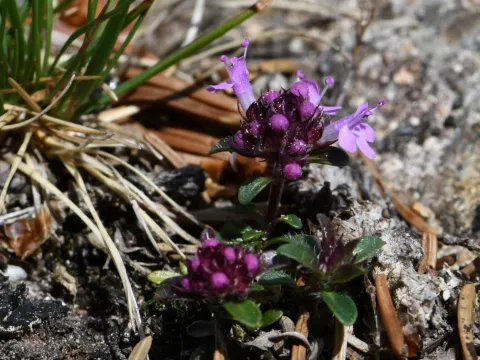
Hairy thyme
Thymus polytrichus
Sowing hairy thyme is best initiated in the early spring once the threat of heavy frost has passed. Given the extremely small size of the seeds, they should be sown on the surface of well-prepared, fine-textured soil, requiring only a light dusting of sand to hold them in place.
What the section contains
Hairy thyme
Germination typically takes two to three weeks under consistent moisture and moderate temperatures. Because seedlings develop slowly during the first several months, maintaining a weed-free environment is essential to prevent young plants from being overwhelmed by faster-growing vegetation.
When starting seeds in trays, it is recommended to keep the substrate moist but not waterlogged. Once the seedlings reach 5-7 centimeters in height, they can be transplanted to their permanent site, ensuring enough spacing for mature growth, which is roughly 30 centimeters apart.
Vegetative propagation via cuttings is a highly effective way to expand a crop of hairy thyme. Softwood cuttings taken in late spring root readily in a mixture of sand and peat, providing a faster and more predictable result than growing from seed.
Planting density should be calculated based on the intended use; for ornamental carpet-like coverage, space plants more closely, while for maximum harvest yield, spacing should allow for optimal airflow between the established mounds.
Hairy thyme (Thymus polytrichus) belongs to the Lamiaceae family. This perennial is naturally adapted to alpine and rocky environments, making it a robust choice for gardens with challenging, well-draining soils that other plants might struggle with.
This species thrives in full sun, which is critical for maximizing the synthesis of essential oils. A lack of direct sunlight will lead to spindly stems, reduced aroma, and an increased susceptibility to fungal diseases caused by retained moisture in the foliage.
Soil drainage is the most vital requirement for successfully growing hairy thyme. It performs best in sandy or gravelly soil with a neutral to slightly alkaline pH; heavy clay soils must be amended with organic matter or grit to ensure they do not hold excessive water.
The plant is highly drought-tolerant once established, thanks to its evolutionary adaptation to arid, high-altitude climates. Watering should be sparse, focusing only on the root zone during prolonged dry spells to avoid wetting the leaves unnecessarily.
Low-fertility soils are generally preferred over nutrient-rich soils for this herb. Excessive nitrogen application encourages rapid, soft growth that is more vulnerable to winter damage and lacks the intense fragrance desired for commercial or culinary use.
The productivity of a hairy thyme crop becomes reliable by the second and third year. As a perennial ground-covering herb, it can yield harvests consistently for many years if it is maintained with periodic pruning to encourage healthy, new growth.
Harvesting is typically performed during the peak flowering stage, when the volatile oils are at their maximum concentration. Careful harvesting involves cutting the upper two-thirds of the stems, ensuring that the woody base remains intact to allow for regrowth.
Proper post-harvest processing is crucial. The foliage must be dried in a dark, well-ventilated area at temperatures below 40 degrees Celsius to ensure the preservation of its essential oils, color, and aromatic properties for the market.
Yields can be maximized by implementing a two-cut system in favorable climates. A primary harvest during the bloom and a secondary, lighter harvest in late summer promote a dense canopy and higher annual production per square meter.
Commercial viability is supported by the plant's dual-purpose nature, serving both the herbal supplement industry and the culinary herb market. Producing consistent, high-quality, organic dried thyme remains a profitable venture for niche growers.
Root rot is the most common threat to hairy thyme, almost exclusively caused by inadequate soil drainage or over-irrigation. Ensuring the planting site mimics the plant's native rocky habitat is the best preventative measure against this pathogen.
Aphids can occasionally colonize the tender new growth during periods of stress. While typically not fatal, heavy infestations can reduce foliage quality and vigor; biological control agents are preferred over synthetic pesticides for herbal crops.
Powdery mildew may develop if plants are grown in crowded, humid conditions with poor air circulation. Thinning out the plants and ensuring they are in an open, sunny location will naturally inhibit the conditions required for fungal spores to spread.
Weed encroachment is a significant threat during the early life of the crop. Manual weeding or the use of inorganic mulches like fine gravel can help keep the base of the plant clear and prevent competition for nutrients and sunlight.
Winter desiccation can occur in exposed, windy locations if the soil freezes deeply while the plants remain dormant. Mulching lightly with grit can help stabilize soil temperatures and protect the root system without trapping excess moisture around the crown.