
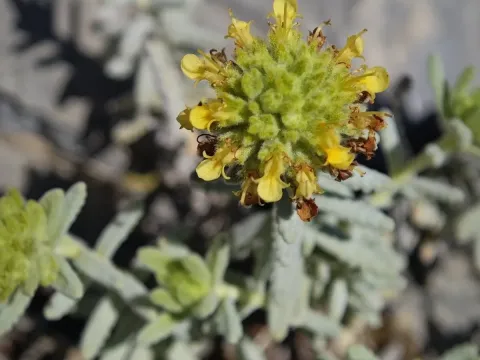
Gold germander
Teucrium aureum
Gold germander is typically propagated through seeds sown in early spring or by stem cuttings taken from healthy, mature plants during the active growing season.
What the section contains
Gold germander
Seeds require a well-prepared seedbed with fine texture and good moisture retention; they should be lightly covered with soil due to their small size.
Germination is most successful when the ambient temperature is maintained between 18 and 22 degrees Celsius, providing consistent warmth for development.
In field production, spacing is essential; plants should be set 30 to 40 centimeters apart to allow for airflow and mitigate the risk of fungal diseases.
The seedling stage is the most vulnerable; therefore, keeping the area free of weeds is necessary to prevent competition for essential nutrients and sunlight.
As a member of the Lamiaceae family, Teucrium aureum is native to rocky, calcareous Mediterranean slopes, which defines its specific environmental needs.
The plant thrives in alkaline to neutral, well-draining soils and cannot tolerate waterlogging or heavy, compacted earth that restricts root development.
Full sun exposure is a non-negotiable requirement for gold germander; lack of light leads to weak, spindly stems and reduced production of essential oils.
The species exhibits high drought tolerance once established, making it a suitable crop for regions with limited rainfall or xeriscaping conditions.
Protection from severe frost is recommended in colder climates, as the plant's woody base may be damaged by prolonged freezing and harsh wind exposure.
The economic value of gold germander is derived from its essential oil content, which is used in both pharmaceutical and cosmetic industries.
Sustainable harvesting of the aerial parts allows for an annual yield that remains consistent for several years once the plantation reaches full maturity.
The peak harvesting window occurs when the plant is in full bloom, ensuring the highest concentration of active biochemical components in the tissues.
Efficiency in harvesting is increased by using mechanized or semi-mechanized cutting tools that allow for clean cuts above the basal leaf rosette.
Post-harvest processing involves rapid drying in dark, airy sheds to prevent oxidative degradation of the delicate aromatic compounds within the plant.
Root rot is the primary threat to this crop, usually triggered by excessive irrigation or poorly drained substrate in the field or greenhouse.
Sucking insects such as aphids can compromise plant health by extracting sap, which may also act as vectors for various plant viruses.
Fungal issues like powdery mildew may arise during periods of high humidity or poor air circulation, requiring cultural controls rather than pesticides.
Effective management includes regular inspection, removal of affected plant material, and ensuring that the planting density allows for adequate evaporation.
Invasive weed species can quickly overtake gold germander plots; thus, mulching with inorganic materials like gravel is often preferred to keep the soil surface dry.
The ideal time to harvest gold germander is during the mid-morning hours after the dew has evaporated but before the heat of the day reaches its peak.
Professional harvesters utilize sharp cutting tools to remove the flowering spikes, ensuring that at least one-third of the growth remains for regeneration.
The harvested stems should be gathered in loose bundles or spread out on drying trays to facilitate even airflow throughout the biomass.
Best practices for storage include:
- keeping the herb in airtight, opaque containers;
- maintaining a cool, dry storage environment;
- avoiding cross-contamination with other spices;
- monitoring moisture levels.
Dried gold germander should retain its signature color and pungent scent for up to 24 months if stored correctly in a climate-controlled facility.