
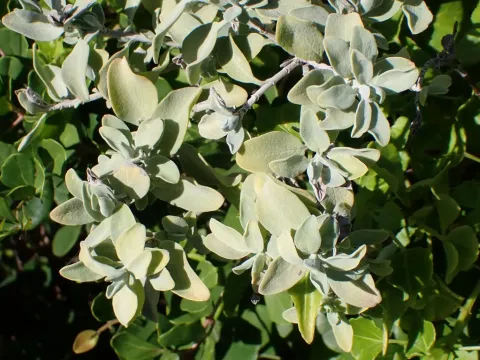
Golden Sage
Salvia aurea
Golden Sage is typically propagated by seeds, which should be sown in a well-draining starting mix during the early spring season.
What the section contains
Golden Sage
For better germination results, seeds may undergo cold stratification for a few weeks to break dormancy before being planted in warm soil.
Light coverage with soil is necessary as the seeds of Salvia aurea require light exposure to germinate effectively within 2-3 weeks.
When starting indoors, maintain a temperature of approximately 20 degrees Celsius to ensure healthy and rapid seedling development.
Gradual hardening off of the seedlings is required before transplanting them into the open garden to prevent environmental shock.
Native to the coastal and interior regions of South Africa, Golden Sage belongs to the Lamiaceae family, known for its aromatic properties.
The plant thrives in full sun exposure and requires a very gritty, well-draining soil profile to mimic its natural arid habitat.
It is highly drought-tolerant once established and does not thrive in heavy, moisture-retentive soils that promote root decay.
Salvia aurea prefers a neutral to slightly alkaline soil pH, which enhances its growth vigor and structural integrity of the stems.
The plant is not frost-hardy and should be overwintered indoors in regions where winter temperatures fall below freezing point.
The primary threat to Golden Sage is root rot, which is almost exclusively caused by overwatering or soil that lacks proper drainage.
Powdery mildew can become a significant issue if the plants are placed in areas with poor air circulation and high relative humidity.
Pests like aphids and spider mites are known to infest the plant during stress periods, especially if the plant is grown in a greenhouse.
Using systemic insecticides is generally discouraged for culinary herbs, so manual removal or neem oil treatments are preferred.
Good spatial management and removing debris from the base of the plant are essential steps to prevent common fungal outbreaks.
Harvesting for essential oils or decorative use should occur when the flower bracts are fully developed and show their characteristic gold color.
The best time to cut the stems is mid-morning, after the dew has evaporated but before the heat of the day reaches its peak.
Cut the stems leaving at least one-third of the plant intact to ensure that the perennial stock continues to grow in the following season.
Air-drying the harvested material in bundles is recommended, keeping them in a dark, dry space to maintain the plant's natural pigments.
Storage should be done in opaque, airtight containers to protect the dried golden bracts from moisture and light degradation.