
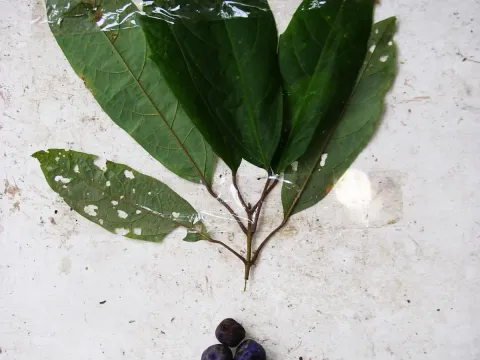
Gmelina moluccana
Gmelina moluccana
Gmelina moluccana, a member of the Lamiaceae family, is a highly valued fast-growing tree species typically propagated via seeds. The seeds require careful handling and often benefit from pre-sowing treatments to break dormancy and ensure uniform germination across the nursery beds.
What the section contains
Gmelina moluccana
Given that these seeds lose their viability relatively quickly, they should be sown immediately after collection. A well-draining, nutrient-rich potting medium is essential for supporting the rapid development of seedlings during the initial few months.
Planting in the field is ideally timed to coincide with the onset of the monsoon season. This approach utilizes natural rainfall to support the young saplings during their critical rooting phase, significantly reducing the mortality rate of new plantations.
Depending on the specific industrial goal, planting density is usually set between 800 and 1,100 stems per hectare. This density promotes apical dominance, helping the trees develop straight, clean boles suitable for high-quality timber production.
Advanced nursery practices, including the use of root trainers or deep containers, allow for the cultivation of robust seedlings that can withstand the environmental challenges of tropical field conditions.
As a true tropical species, Gmelina moluccana thrives in regions with consistent high temperatures, ideally ranging between 22 and 32 degrees Celsius. It is highly sensitive to frost and cold snaps, which can permanently stunt its growth.
The species prefers deep, fertile, and well-drained soils. Waterlogged conditions are detrimental and often lead to root rot; therefore, selecting sites with proper slope or soil structure is a vital prerequisite for site preparation.
Gmelina moluccana is an obligate heliophyte, meaning it requires full, unobstructed sunlight for optimal growth. Canopy management and weed control are mandatory in young plantations to prevent suppression from competing vegetation.
Rainfall requirements are significant, as the species performs best in areas receiving over 1,500 mm of annual precipitation. However, it displays a degree of physiological plasticity allowing it to tolerate short, distinct dry seasons.
Soil pH levels should ideally fall within the range of 5.5 to 7.0. In areas with highly acidic or nutrient-poor soils, corrective liming and fertilization with basic NPK compounds are necessary to ensure vigorous biomass accumulation.
The hallmark of Gmelina moluccana is its exceptionally fast growth rate, often reaching harvestable timber dimensions in a relatively short rotation cycle of 8 to 15 years, depending on the management intensity.
Yields are maximized through precision silviculture, which includes early thinning and periodic fertilization. These interventions focus the tree's energy on vertical growth and stem diameter expansion, leading to higher volumes of marketable timber.
The wood is lightweight, easy to machine, and possesses a fine, uniform texture. These physical attributes make it a preferred material for furniture making, plywood veneers, light construction, and the pulp and paper industry.
Regrowth capacity via coppicing is another economic advantage of this species. After the initial harvest, the rootstock can produce new shoots, enabling secondary timber crops without the need for site replanting.
Integrating Gmelina plantations into agroforestry systems can also generate additional income through intercropping with shade-tolerant crops during the initial years of the tree rotation.
Plantations of Gmelina moluccana can be vulnerable to various fungal pathogens, particularly in regions with high humidity. Leaf spot diseases are common and can reduce the overall photosynthetic capacity of the tree if left unmanaged.
Defoliating insects, such as certain species of lepidopteran larvae, pose a recurring threat. Outbreaks can cause significant damage to young saplings, slowing growth rates and potentially weakening the trees against secondary infections.
Integrated Pest Management (IPM) is the recommended strategy for protecting Gmelina stocks. This includes routine monitoring, the use of biological control agents, and, where necessary, targeted application of environmentally sensitive pesticides.
Maintaining adequate spacing within the plantation is crucial to prevent the build-up of moisture and stagnant air, which are primary drivers of pathogen development. Regular thinning helps ensure sufficient airflow throughout the stand.
Strict sanitary practices, such as the prompt removal and destruction of diseased or infested biomass from the plantation site, are vital for preventing the spread of diseases and ensuring the long-term health of the crop.