
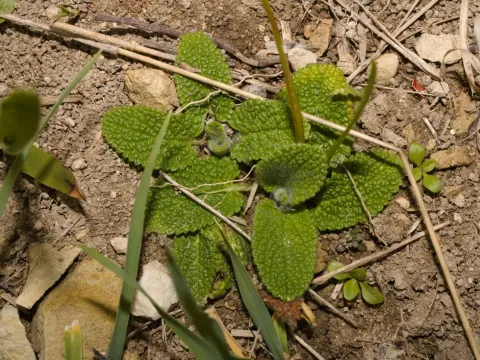
Stachys germanica
Stachys germanica
Stachys germanica, commonly known as downy woundwort, belongs to the Lamiaceae family. It is a perennial herbaceous plant that is typically propagated by seeds sown during autumn or early spring.
What the section contains
Stachys germanica
For successful germination, seeds require a period of cold stratification, which helps break dormancy and ensures a more uniform emergence of seedlings in the field.
Seeds should be sown shallowly, ideally at a depth of 0.5 to 1 cm, as they are small and need light and consistent moisture to germinate effectively.
Spacing between rows should be maintained at 45–60 cm to allow for proper airflow and root development, as the plant eventually forms a wide basal rosette.
Once established, the seedlings exhibit slow initial growth, focusing their energy on developing a strong root system before producing flowering stalks in the second year.
The plant thrives in full sun and requires well-drained, lime-rich soils to reach its full potential. It is highly intolerant of waterlogged conditions, which can lead to root rot.
Stachys germanica demonstrates excellent drought tolerance due to its dense, woolly hairs on the leaves, which reduce transpiration and protect the plant from extreme heat.
Climate-wise, it is adapted to temperate regions and is quite hardy, capable of surviving cold winters if the soil is not excessively wet during the freezing months.
Fertilization should be moderate, focusing on potassium and phosphorus to encourage sturdy growth and flowering, while excessive nitrogen should be avoided to prevent soft, vulnerable growth.
Its role as a pollinator-friendly plant makes it a beneficial component in biodiversity-focused agricultural systems, supporting local bee and butterfly populations.
The primary threats to Stachys germanica include fungal pathogens, such as powdery mildew, which thrive in stagnant, humid air conditions within dense plantings.
Pests like aphids and certain species of beetles may feed on the foliage, potentially weakening the plant if infestations are not managed early in the season.
Maintaining proper plant spacing is the most effective cultural control method to reduce the risk of disease spread and keep the foliage dry.
Weed management is critical during the establishment phase, as the plant can be easily outcompeted by aggressive grasses and broadleaf weeds in its first year.
Integrated pest management strategies, emphasizing the use of beneficial insects and resistant varieties, are recommended over broad-spectrum chemical applications.
Harvesting for agricultural or medicinal use is best performed during the peak flowering stage, when the concentration of essential secondary metabolites is highest.
The stems should be cut at a height that allows the plant to regenerate, ensuring that the basal rosette remains intact for future production cycles.
Immediate post-harvest processing is required; material should be kept out of direct sunlight and transported to a clean, well-ventilated drying facility.
Drying should take place in a shaded area with low humidity to preserve the characteristic silver-grey color and the medicinal properties of the foliage.
Once dried, the crop should be stored in containers that protect it from moisture and light to maintain quality and shelf life until market distribution.