
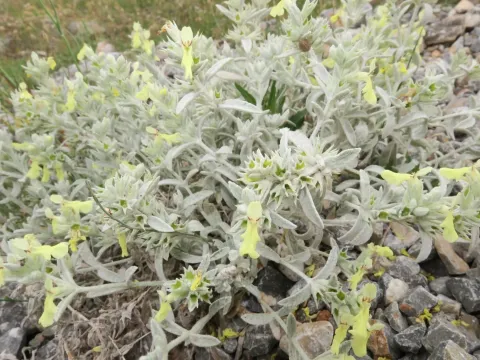
Stachys iva
Stachys iva
Stachys iva is a perennial herbaceous plant belonging to the Lamiaceae family, known for its distinct aromatic properties and traditional medicinal usage.
What the section contains
Stachys iva
Sowing typically occurs in early spring once soil temperatures reach approximately 8–10 degrees Celsius to ensure steady and uniform germination.
Seeds are small and should be sown at a shallow depth of about 1 centimeter, ensuring they are pressed firmly into the soil for proper moisture uptake.
In large-scale production, row spacing is generally kept at 50 centimeters, allowing sufficient room for mechanical cultivation and weed control measures.
The plant demonstrates a relatively slow growth rate during its initial establishment phase, requiring consistent attention to weeding during the first season.
Stachys iva thrives in locations with high levels of direct sunlight, which is critical for the development of its secondary metabolites and essential oils.
The crop prefers well-drained, light-textured soils with a neutral or slightly alkaline pH level, as it is sensitive to waterlogged conditions.
Being highly drought-tolerant, this plant is well-suited for cultivation in arid or semi-arid regions where water resources are limited and irrigation is minimal.
The ideal temperature range for its vegetative development is 20–25 degrees Celsius, though it can tolerate cooler nights common in its natural range.
Proper field management includes moderate fertilization, as excessive nitrogen supply may negatively impact the chemical composition and cold resistance of the plant.
The main threats to crop health include fungal diseases such as powdery mildew, especially in humid conditions or areas with inadequate air circulation.
Pests like aphids and leaf-eating beetles can occasionally attack the foliage, necessitating regular scouting and early intervention if population thresholds are exceeded.
Implementing a diverse crop rotation cycle is essential to prevent the buildup of soil-borne pathogens and to maintain long-term soil fertility in the fields.
Maintaining adequate row spacing and timely weed removal helps in reducing the humidity within the canopy, which in turn limits the spread of fungal infections.
Biological control agents are preferred over chemical pesticides to ensure the final harvest remains free of residues, meeting quality standards for medicinal use.
Harvesting is best performed during the peak flowering stage, which coincides with the maximum accumulation of essential oils within the flowering tops.
The aerial parts are harvested by cutting the stems 15–20 centimeters above the ground, which promotes vigorous regrowth and protects the perennial root system.
Post-harvest handling is critical; the harvested material should be transported to drying facilities immediately to avoid heat-induced degradation.
Drying is conducted in specialized, ventilated rooms at temperatures not exceeding 40 degrees Celsius to preserve the essential oil profile and plant color.
Once dried, the product should be stored in cool, dark, and dry conditions to ensure its potency and quality for industrial or pharmaceutical processing.