
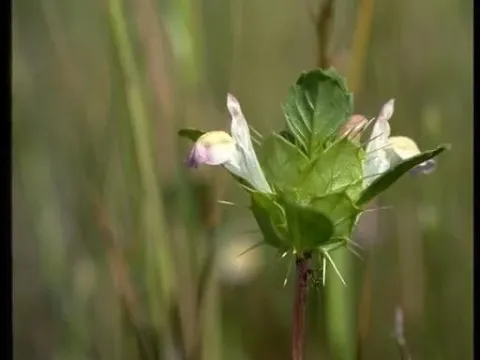
Stachys longispicata
Stachys longispicata
Sowing seeds of Stachys longispicata is preferably carried out in the spring period, once the soil has warmed up to 10-12 degrees Celsius. The optimal time is considered to be late April or early May, which allows the plant to adapt before the onset of summer heat.
What the section contains
Stachys longispicata
Late autumn sowing in October is also possible, which ensures natural seed stratification in the soil. With this approach, seedlings appear in early spring, which contributes to an earlier development of the crop's root system.
The sowing depth is 1-2 centimeters; it is important to ensure tight contact between the seed and the soil for uniform germination. It is recommended to sow in rows with spacing of about 45-60 centimeters to ensure high-quality care.
Stachys seedlings require regular watering in the initial phase of vegetation, as young plants are sensitive to the drying out of the topsoil. After the formation of 3-4 pairs of true leaves, thinning is carried out, leaving 20-30 centimeters between plants.
When cultivating on an industrial scale, it is important to use high-quality seed material with high germination energy. Maintaining planting density is critical to preventing competition between plants for sunlight and nutrients.
Stachys longispicata belongs to the Lamiaceae family and prefers open, well-lit areas. The plant shows high adaptability to various conditions, but grows best in light, fertile loams with neutral acidity.
The crop possesses moderate drought resistance; however, it requires regular moisture during periods of active growth to achieve high biomass. Excessive water stagnation in the root zone can lead to root rot, so high-quality soil drainage is necessary.
The plant responds well to organic fertilizers, such as compost or humus, which are applied during autumn tillage. During the growing season, phosphorus-potassium fertilizers are effective, contributing to improved immunity and winter hardiness.
For optimal plant development, it is important to keep inter-row spaces free from weeds, especially in the first half of the growing season. The crop reacts extremely negatively to colonization by couch grass or other aggressive perennial grasses.
In the temperate climate, Stachys longispicata shows sufficient winter hardiness and does not require complex covering for the winter. Nevertheless, mulching the root zone with peat or leaves helps protect the growth buds during snowless winters.
The yield of green mass of Stachys longispicata depends on the agricultural background and the regularity of fertilization. In favorable years, a significant volume of raw material used in the pharmaceutical and cosmetic industries can be obtained per hectare.
Maximum productivity indicators are reached in the second to third year of the plant's life, when a powerful bush with many flowering stems is formed. A gradual decrease in yield is observed after the fourth year, which requires planned plantation renewal.
Factors limiting the harvest include lack of moisture during critical development phases, as well as the presence of soil pathogens. Systematic harvesting during the active flowering phase allows stimulating secondary shoot growth at the end of the season.
The quality of the yield is determined by the content of biologically active substances—flavonoids, essential oils, and organic acids. To preserve their concentration, it is important to observe temperature regimes when drying the collected raw material.
General productivity can range from 1.5 to 2.5 tons of dry mass per hectare under intensive cultivation technology. High demand for this species' raw materials ensures the economic feasibility of its cultivation.
The main diseases affecting Stachys longispicata are fungal infections, such as powdery mildew and various types of leaf spot. These manifest primarily in high humidity and dense plantings that impede bush ventilation.
Among pests, leaf-eating insects and aphids pose the greatest danger, which can cause significant damage to the quality of the commercial part of the plant. Preventive measures include proper agricultural practices and the timely removal of damaged specimens.
Root rots are a serious threat when the water regime is disturbed. Pathogen development in the soil is often provoked by waterlogging, so it is important to control the level of groundwater and avoid crust formation on the soil surface.
To minimize chemical load when protecting plants, it is recommended to use biological fungicides and insecticides. An important element of protection is the observance of crop rotation, which excludes returning the crop to its previous location earlier than in 4-5 years.
- Preventive spraying with copper-containing preparations in early stages.
- Regular weeding and loosening of inter-row spaces for root aeration.
- Removal of plant residues in autumn to prevent fungal spore overwintering.
The harvesting of Stachys longispicata raw material is carried out during the mass flowering phase, when the content of beneficial components in the aerial part of the plant reaches its maximum. Usually, this period falls in the second half of the summer.
The tops of the stems, about 20-30 centimeters long, are cut with sharp garden tools, leaving the lower part of the shoot for subsequent bush regeneration. It is important not to damage the root system during harvesting work.
After cutting, the raw material should be immediately delivered to the drying site to avoid fermentation and loss of quality. In field conditions, the collected mass is spread in a thin layer on mats in the shade, protecting it from direct sunlight.
To speed up the process, forced ventilation in drying chambers at a temperature of no more than 40 degrees Celsius is permitted. Over-drying the raw material leads to leaf shattering, which reduces the commercial appearance of the finished product.
Storage of dried Stachys is carried out in dry, dark, and well-ventilated rooms in paper bags or other containers that provide protection from moisture and foreign odors. The shelf life of properly dried raw material is up to two years.