

Reference · Crops
Stachys
Stachys L.
Sowing Stachys is primarily conducted in the spring when soil temperatures reach 8–10 degrees Celsius. For optimal germination, the seeds require stratification, which is why many agronomists recommend autumn sowing in prepared furrows to allow for natural exposure to winter temperatures.
11
items
What the section contains
 Annual hedge-nettle
Stachys annua (L.) L.
9 products
Annual hedge-nettle
Stachys annua (L.) L.
9 products
 Crosne
Stachys affinis Bunge
3 products
Crosne
Stachys affinis Bunge
3 products
 Marsh woundwort
Stachys palustris L.
2 products
Marsh woundwort
Stachys palustris L.
2 products
 Alpine hedgenettle
Stachys alpina L.
Alpine hedgenettle
Stachys alpina L.
 Field woundwort
Stachys arvensis (L.) L.
Field woundwort
Stachys arvensis (L.) L.
 Stachys aethiopica
 L.
Stachys aethiopica
Stachys aethiopica L.
 Stachys byzantina
 K. Koch x Stachys debilis Kunth
Stachys byzantina
Stachys byzantina K. Koch
Stachys byzantina
Stachys byzantina K. Koch x Stachys debilis Kunth
Stachys byzantina
Stachys byzantina K. Koch
 Stachys debilis
 Kunth
Stachys debilis
Stachys debilis Kunth
 Stachys japonica
 Miq.
Stachys japonica
Stachys japonica Miq.
 Stachys macrantha
 (K. Koch) Stearn
Stachys macrantha
Stachys macrantha (K. Koch) Stearn
Marketplace
Products in this section · 12


Stefarane, EC (fluroxypyr in the form of methylheptyl ester, 333 g
DDE Farm AG
Herbicides
0
0
1 offer
25.49 €per 1 l
Buy
Stachys
The sowing depth should not exceed 1–2 centimeters to ensure that the small seeds can emerge successfully. The planting pattern depends on the specific species; for field cultivation, a row spacing of 45–60 centimeters is generally considered ideal for optimal plant development.
A crucial factor during sowing is ensuring sufficient contact between the seeds and the moist substrate. During the first weeks after emergence, it is necessary to maintain stable soil moisture, avoiding the drying out of the top layer, which can be fatal to young seedlings.
When propagating via rhizomes, planting is best performed in early spring or early autumn. The cuttings should have a healthy root system and several viable growth buds, which guarantees rapid establishment and vigorous growth of the aerial parts.
Plant density should be calculated based on the intended use of the crop. For medicinal raw material production, the stand density must allow for adequate airflow, which significantly reduces the risk of fungal infections within the canopy.
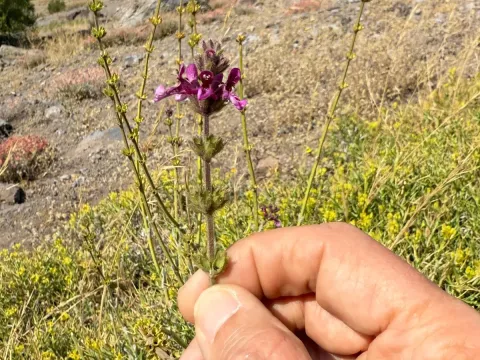
Stachys belongs to the Lamiaceae family and is known for its high adaptability to various growing conditions. The crop prefers sunny, well-lit locations, although some species can tolerate partial shade throughout the day without significant loss in vitality.
The plant has moderate requirements regarding soil conditions. The best growth metrics are observed in light loamy or sandy soils with good aeration and a neutral pH, which facilitates the development of a robust and healthy root system.
The plant demonstrates good cold hardiness and can survive temperate winters without significant cover. Stachys is relatively drought-tolerant, although during prolonged periods without rainfall, supplementary irrigation is required to maintain the quality of the raw material.
A primary requirement is the absence of standing groundwater at the site. Excessive moisture, especially when combined with low temperatures, can lead to rhizome rot, which negatively impacts crop yield and overall plant longevity.
To ensure high concentrations of bioactive compounds within the plant, it is recommended to apply moderate amounts of mineral fertilizers, focusing on potassium and phosphorus complexes during the active vegetative phase.
The yield of Stachys depends directly on the species and the intensity of agricultural management practices. Through proper irrigation and timely fertilization, high productivity of vegetative biomass suitable for pharmaceutical processing can be achieved.
On an industrial scale, the output of dry raw material varies widely depending on environmental factors. Efficient fertilizer use and consistent weed control during the first months of growth allow for an increase in total harvest by 20–30 percent.
The harvest schedule is determined by the intended purpose of the crop. For the extraction of essential oils or flavonoids, it is critical to perform harvesting during strictly defined phenological phases, typically during peak flowering.
Perennial Stachys plantings, when cared for according to best practices, can maintain high productivity in the same location for up to 4–5 years. After this period, rejuvenation of the plantation is required through root division or crop rotation strategies.
The economic efficiency of the crop is ensured by low maintenance costs, as the plant is highly competitive against most weeds and rarely requires the application of expensive chemical pesticides for protection.
The primary threats to Stachys cultivation are fungal diseases that thrive in conditions of high humidity and poor air circulation. Common pathogens include various species of powdery mildew and root rot, which can cause significant damage to the stand.
Among pests, sap-feeding insects can cause the most damage. Specifically, aphids and spider mites can spread rapidly during hot weather, leading to leaf deformation and stunted growth of the culture if left untreated.
For pest prevention, it is recommended to conduct regular inspections and remove severely infested specimens. The use of biological control agents is preferred, especially if the Stachys is being grown for medicinal or culinary purposes.
Weeds present a serious challenge during the seedling phase. During the initial stages of development, manual or mechanical weeding is essential to provide young plants with sufficient light and soil nutrients for their survival.
Adherence to crop rotation is an mandatory requirement to prevent the buildup of soil-borne pathogens. It is not recommended to plant Stachys on the same plot for at least 3–4 years to keep the infection pressure low.
Harvesting Stachys is carried out mechanically or manually during the full flowering phase. It is during this period that the concentration of medicinal components in the aerial parts reaches its maximum, which is vital for high-quality processing.
Cut herb material must be sent for drying immediately to prevent oxidation and the loss of volatile essential oils. Drying is performed in well-ventilated areas or specialized dryers at temperatures not exceeding 40–45 degrees Celsius.
After the drying process, the raw material undergoes cleaning to remove foreign impurities and is then milled. It is essential to ensure that no soil particles or diseased plant fragments enter the final product, as specified by quality standards.
Storage of dried raw material is conducted in dry, dark rooms while maintaining specific temperature conditions. Using multi-layered paper bags allows for the preservation of organoleptic properties and biological activity over an extended period.
For tuberous species of Stachys, harvesting is conducted in the autumn after the aerial parts have withered completely. Tubers are carefully unearthed, cleaned of residual soil, and sorted by size for market distribution or storage in cool cellars.