


SKU #73843
·
59 views
Crosne SHELLFLOWER
Stachys
User rating
0 votes0% positive reviews
No ratings yet — be the first.
Assignment
Food Culture
Registration year
1994
Prices in stores
from11.52 €per 1000 seeds
pack from 0.15 € per 0.3 g
8 offers from 8 stores
Store offers · 8 from 8 stores
Prices are updated on loadLoading offers…
Available at: Bat Opt · Baza Lubny · Klop-Control · Kupa · Online-Store · Optoman · Shoptour · Zhalo
Aggregator catalog: prices are collected automatically from store websites, normalized by AI and converted at the current exchange rate. Before ordering, confirm the price and availability on the store's website. This block is not indexed by search engines — the data is loaded after the page opens.
About product

A premium niche vegetable known for its unique nutty flavor and the ability to safely overwinter in the field.
Assignment
Food Culture
Registration year
1994
Description
Cultivating Stachys 'Rakushka': Economic and Agronomic Perspective
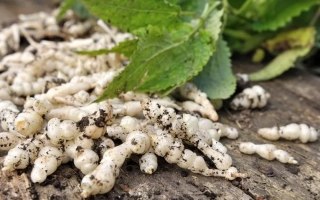
Stachys 'Rakushka', developed by the Federal Scientific Center for Vegetable Growing, is a specialty vegetable crop gaining traction among growers looking to diversify into niche markets. Unlike conventional root crops, 'Rakushka'—often called the Chinese artichoke—offers a unique combination of high nutritional value, specifically stachyose content, and incredible storage flexibility.
Operational Strategy for Growers
The practical appeal of 'Rakushka' lies in its resilience to harvest logistics. The tubers can remain in the soil throughout the winter, allowing producers to harvest on demand rather than all at once. This significantly reduces the overhead costs associated with refrigerated storage and labor-intensive sorting processes.
- Soil Management: For optimal tuber development, the crop requires loose, well-drained soil. Regular hilling during the peak formation stage (mid-to-late summer) is the most critical agronomic operation to ensure the 'shell' shape quality.
- Market Positioning: The tubers are prized in the premium culinary sector for their distinct, nutty flavor and crisp texture, which stays firm even after cooking. This makes them a high-margin product for high-end restaurants and specialty gourmet outlets.
- Resource Efficiency: Since the tubers can overwinter in the ground, farmers can utilize them as a 'living warehouse', mitigating the risk of loss during post-harvest storage.
For a modern farming operation, 'Rakushka' is an excellent candidate for small-to-medium-scale intensive production. Its unique form factor and ability to adapt to variable harvest schedules make it a strategic crop for those aiming to supply the organic and gourmet food industry.
Crop & resistance
Crop
Specifications
| Assignment | |
|---|---|
| Registration year | 1994 |
| Catalog | Catalog → Stachys |
| Legal data |
Show · 3 |
| Country | Russia |
Not yet комментариев. Be the first!
See also
Often considered together with this variety



Recently viewed
Products you’ve viewed on this site
Reviews · 0