

Description
Growing requirements
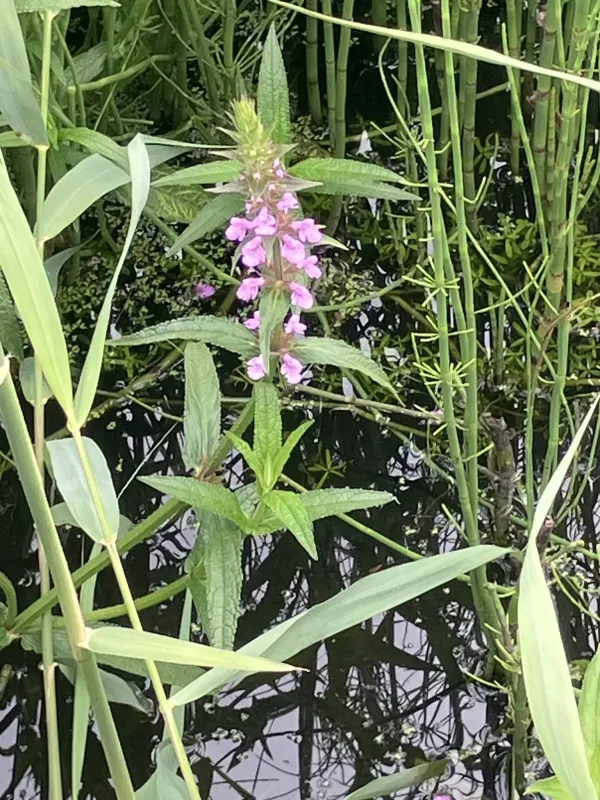
Marsh woundwort (Stachys palustris L.) is a perennial herbaceous plant belonging to the Lamiaceae family. It is recognized by its rhizomes, which bear tuberous thickenings that allow the plant to perenniate successfully.
Native to Europe and Asia, the plant is typically found in wetlands, marshy meadows, and along riverbanks. It has successfully adapted to human-altered landscapes, frequently appearing in waterlogged agricultural fields.
The species requires moist, nutrient-rich soils. It thrives in loamy and peaty substrates, showing high tolerance for poorly drained conditions where other species might fail to establish.
Botanically, it features an erect stem reaching 30 to 100 cm in height, covered in fine hairs. Its leaves are lanceolate and serrated, while the flowers bloom in whorled spikes with a characteristic pinkish-purple color.
It is a highly competitive species that spreads primarily through its creeping rhizomes. This asexual reproduction method makes it a persistent plant that can rapidly dominate suitable moist habitats.
Yield
Marsh woundwort has a history of utilization as a food source, particularly its tubers. Historically, they were harvested, dried, and ground into flour, known for its high starch content and nutritional value.
While not currently a mainstream agricultural crop, its high biomass production and starch reserves in the tubers offer potential as a source for industrial starch or raw materials for bio-based products.
The plant is also used in herbal medicine. Its leaves and flowering tops contain compounds with sedative, anti-inflammatory, and antiseptic properties, often used in infusions and tinctures.
Potential for commercial cultivation is hampered by the small size of the tubers and the difficulty of mechanical harvesting. Research into domestication focuses on selecting variants with larger root structures.
As a forage crop, it could potentially be managed on wetlands unsuitable for cereals, providing a source of nutrition for livestock if processed correctly to remove excess tannins.
Main diseases and pests
Marsh woundwort is susceptible to various pests, including leaf-feeding beetles and aphids. These insects can significantly reduce the photosynthetic capacity of the plant during the early growth stages.
Fungal pathogens such as powdery mildew and rusts are common, especially in environments with high humidity and poor air circulation, leading to premature leaf senescence and yield reduction.
In farming, it is often treated as a problematic weed because it can serve as a reservoir for viruses and diseases that attack essential food crops like potatoes and legumes.
Controlling the plant requires integrated management practices. Deep tillage is often employed to bring the tubers to the surface, where they can be destroyed by drying or frost.
Chemical control must be handled carefully, as the plant's preference for riparian zones makes it sensitive to the regulations governing herbicide application near bodies of water.
Reference
Connections · Marsh woundwort
Most often together:
Marketplace
