
Field woundwort
Stachys arvensis (L.) L.
Description
Growing requirements
Field woundwort (Stachys arvensis) is an annual herbaceous plant classified within the Lamiaceae family. Originally native to Europe and the Mediterranean basin, it has established itself globally as a common field weed in various temperate and subtropical environments.
The plant thrives in moist, well-drained soils, often favoring loamy or sandy substrates. It frequently colonizes disturbed habitats such as arable fields, garden beds, and track verges where there is sufficient moisture during the initial growth phases.
Climatically, it prefers temperate conditions and is characterized by its ability to germinate throughout most of the growing season, provided that moisture levels are adequate and temperatures do not reach extreme levels.
Soil requirements involve moderate fertility, though the plant is notably responsive to higher nitrogen levels often found in managed agricultural soil. It does not tolerate prolonged waterlogging or dense, compacted clay environments well.
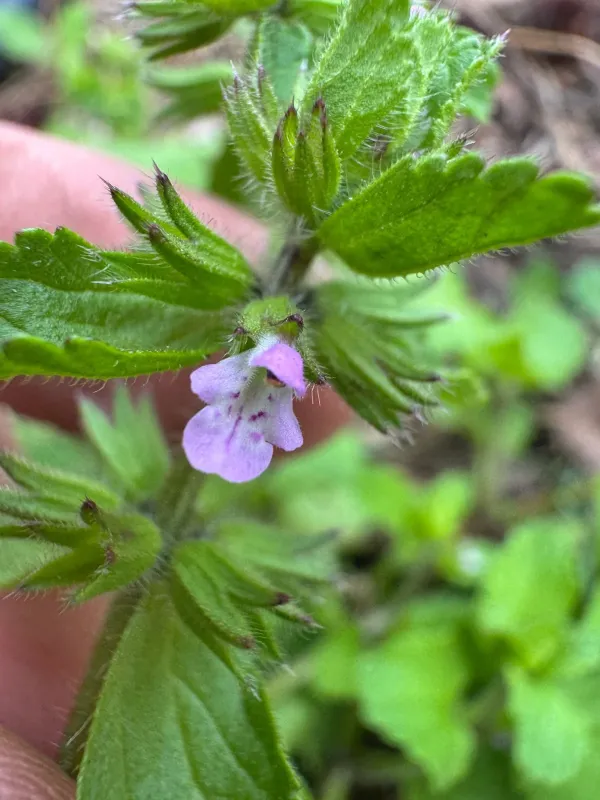
Botanical identification is marked by prostrate to ascending stems, opposite leaves, and small, pale pink or mauve flowers arranged in spike-like racemes. Its rapid life cycle is a key adaptation for survival in frequently disturbed agricultural plots.
Main diseases and pests
In farming, Field woundwort acts as a competitive weed that can hinder the development of smaller crops by competing for sunlight, water, and essential nutrients during the early stages of crop establishment.
Effective management strategies rely heavily on preventative measures. Ensuring high purity of seed stocks and rotating crops regularly are essential to break the germination cycle of this annual weed species.
Mechanical control is highly effective given the plant's relatively shallow root system. Regular harrowing and inter-row cultivation during the early growth stages significantly reduce population pressure within the field.
Chemical control options include selective herbicides targeting broad-leaved weeds. Timely application, ideally while the plant is in the seedling or rosette stage, maximizes efficacy and reduces the need for repeated treatments.
Although it is not classified as a major host for catastrophic diseases, it can harbor common pests that may migrate to related economic crops, necessitating regular crop scouting and sanitation efforts along field margins.