
Stachys debilis
Stachys debilis Kunth
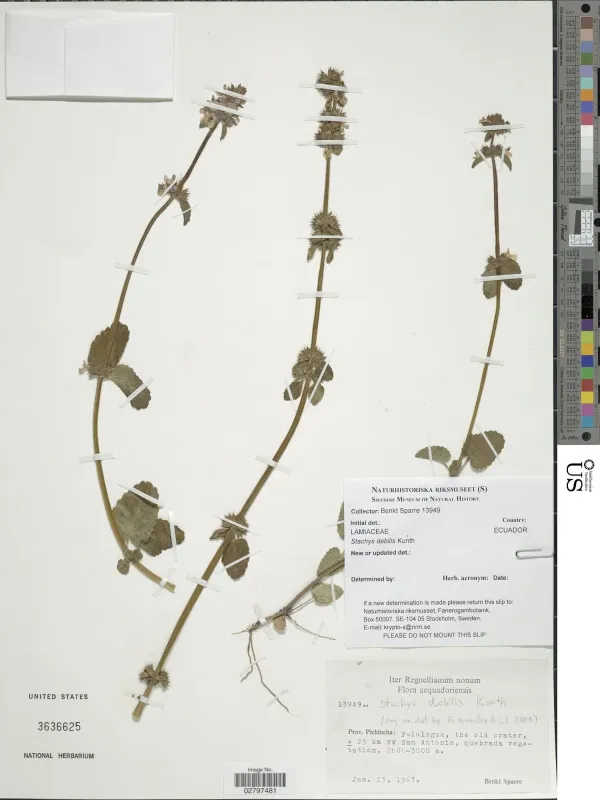
Description
Growing requirements
Stachys debilis is a perennial herbaceous plant belonging to the Lamiaceae family. Known for its distinct growth habit, the plant is characterized by relatively weak or sprawling stems, which serve as its primary identifier in botanical surveys.
The plant is native to the Andean regions of South America. It has evolved to thrive in high-altitude environments, which makes it particularly adapted to temperate mountain climates with specific light and humidity cycles throughout the growing season.
For agricultural production, Stachys debilis requires well-drained, sandy-loam soils. It is sensitive to waterlogging, as the root system is prone to decay if soil aeration is compromised, necessitating careful site selection before planting.
The crop prefers full sunlight to partial shade conditions. Providing adequate spacing is essential to ensure proper air movement, which helps reduce the risk of humidity-related issues that often affect high-altitude species when grown at lower elevations.
Economic use of this plant is largely related to its traditional medicinal properties and potential applications in herbal research. Modern cultivation focuses on optimizing yield through standardized soil management and nutrient application protocols.
Main diseases and pests
The primary threats to crop health are fungal pathogens, specifically those causing root rot. Excessive moisture levels are the most common trigger, making soil management the most important defensive strategy for a successful harvest.
Insect pests, such as aphids and spider mites, frequently attack the foliage of Stachys debilis. These pests can rapidly colonize dense patches, leading to chlorosis and significant reduction in overall plant vigor if not controlled early.
Powdery mildew is a common concern during humid, stagnant weather. Regular inspection of the undersides of the leaves is recommended, as early detection allows for effective treatment with minimal environmental impact.
Weed competition can significantly inhibit the development of this slow-growing crop. Implementing a robust weed control plan, either through mechanical cultivation or careful mulching, is vital for the survival of young seedlings.
Integrated Pest Management (IPM) practices should be employed to maintain crop health. This includes promoting beneficial insect populations and using selective control methods to keep pest populations below damaging levels during the peak growth phase.