
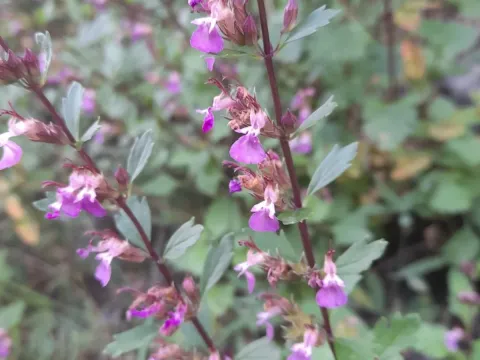
Shining germander
Teucrium lucidum
Shining germander (Teucrium lucidum) is a perennial member of the Lamiaceae family. It is typically propagated through seeds or stem cuttings to establish new plantation beds.
What the section contains
Shining germander
Seeds should be sown in late autumn or early spring. If sowing in the spring, it is highly recommended to stratify the seeds to ensure uniform germination rates across the plot.
When starting indoors, use a well-draining, lightweight potting mix. Maintain a moderate temperature and ensure the seedlings receive adequate light to prevent leggy growth.
Transplanting to the field should occur once the danger of frost has passed and the seedlings have developed a robust root system, typically in late spring or early summer.
Proper plant spacing, approximately 30 to 40 centimeters apart, is essential for air circulation and long-term development of the perennial clumps.
This species thrives in sunny, open locations, reflecting its Mediterranean origin. It performs best in full sun, which enhances the production of essential oils.
The soil should be sandy or rocky with excellent drainage. Teucrium lucidum is highly intolerant of waterlogged conditions, which can lead to root system failure.
Once established, the crop is quite drought-tolerant. However, supplemental watering during prolonged heat waves can improve biomass yield in commercial settings.
Temperature requirements are moderate; the plant prefers warm conditions but is hardy enough to survive moderate winter frosts with minimal protection in most climates.
Soil nutrient requirements are relatively low. Avoid excessive nitrogen fertilization, as this encourages lush foliage at the expense of secondary metabolites and aromatic compounds.
The primary threats to Teucrium lucidum are fungal pathogens, specifically powdery mildew and various root rots, which thrive in humid or stagnant air environments.
Pest pressures include aphids and spider mites. These pests typically infest the plant during hot, dry spells or when the plant is under abiotic stress.
Integrated pest management should focus on cultural practices, such as maintaining appropriate spacing between plants to reduce humidity and improve natural ventilation.
Avoid broad-spectrum insecticides if possible, as these can harm beneficial pollinators attracted to the germander's flowers during the mid-summer bloom.
Regular inspection of the leaf underside is crucial for early detection of mite populations, allowing for targeted treatment before the infestation reaches economic thresholds.
Harvesting is conducted during the peak flowering stage, which is when the concentration of essential oils in the aerial parts is at its absolute maximum.
The upper parts of the stems are harvested using clean shears, leaving the lower base of the plant intact to allow for a second flush or successful overwintering.
After collection, the plant material should be kept in a cool, shaded area to prevent overheating and the subsequent loss of volatile aromatic oils.
Drying must occur in a temperature-controlled environment, ideally below 40 degrees Celsius, to maintain the chemical profile and appearance of the final product.
Final storage involves placing the dried herb in moisture-proof, dark packaging to prevent photo-degradation and maintain product quality for the duration of its shelf life.