
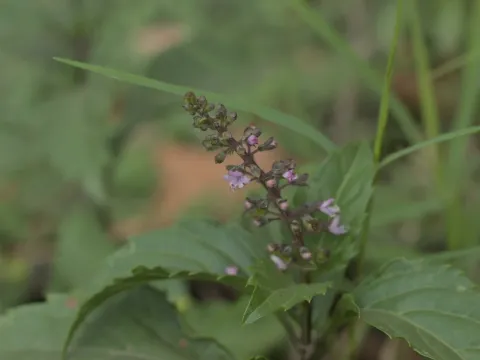
Sello Basil
Ocimum selloi
Sello Basil (Ocimum selloi) is a perennial herb belonging to the Lamiaceae family, widely grown as an annual in temperate climates due to its sensitivity to cold.
What the section contains
Sello Basil
Seeds should be sown in greenhouses or warm indoor environments starting in March to ensure a strong start before the spring warming period.
The seeds require a depth of approximately 0.5–1 cm and a consistent substrate temperature of about 20–22°C to achieve optimal germination rates.
Once the seedlings develop their first true leaves, they should be transplanted into individual pots or containers to encourage robust root system development.
Transplanting into the permanent outdoor location should only occur once the soil has warmed sufficiently and the risk of frost has completely passed.
This crop thrives in sunny, sheltered locations with plenty of direct sunlight, which is essential for maximizing the production of its characteristic essential oils.
Soil quality is paramount; Sello Basil prefers fertile, well-draining, and moisture-retentive soils with a slightly acidic to neutral pH level.
Adequate watering is required throughout the growing season, but it is vital to avoid waterlogging, which can lead to root rot and fungal complications.
Regular weeding and soil aeration help maintain root health and vigor, allowing the plant to reach its full vegetative potential during the summer months.
The application of organic compost during soil preparation is highly recommended to provide a steady supply of nutrients for the rapidly growing herb.
By employing proper pruning techniques, gardeners and farmers can significantly increase the yield of fresh leaves harvested throughout the season.
Pinching back the terminal buds stimulates bushier growth and discourages early flowering, ensuring that the plant focuses its energy on leaf production.
Under optimal conditions, Sello Basil provides multiple harvests, allowing for a continuous supply of fresh produce for culinary or market purposes.
The plant demonstrates high adaptability to container gardening, making it an excellent candidate for small-scale production in greenhouses or urban settings.
Yield efficiency is maximized when the plant is kept in a vegetative state, as flowering marks the decline of leaf flavor and overall aromatic quality.
Damping-off is a common issue for young seedlings, typically caused by poor drainage, high humidity, and lack of air circulation in the seedbed.
Fusarium wilt can manifest as sudden yellowing and wilting of the plants, particularly in soils that remain consistently damp for long periods.
Aphids and spider mites are the most frequent pests, capable of causing significant damage to the leaves if infestations are not identified and managed early.
Integrated pest management, including the use of neem oil or insecticidal soaps, is often preferred to maintain the herb's suitability for consumption.
Proper spacing between plants is an essential preventive measure, as it ensures adequate airflow and reduces the risk of moisture-related fungal diseases.
Harvesting is best performed in the morning hours when the moisture content and essential oil levels in the leaves are at their daily peak.
Leaves and young shoots should be cut cleanly, leaving enough of the plant structure to allow for secondary regrowth and subsequent harvest cycles.
Post-harvest care involves immediate cooling and careful handling to prevent mechanical damage and bruising, which can negatively affect the shelf life.
For those interested in preservation, drying should be done in a shaded, well-ventilated area to preserve the delicate aromatic profile of the Sello Basil.
Freshly harvested bunches are typically stored at cool temperatures to maintain freshness, ensuring the product reaches the consumer in optimal condition.