
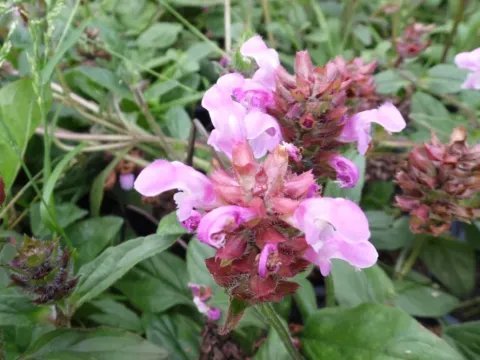
Self-heal hybrid
Prunella hybrids
The sowing of Self-heal hybrid seeds is primarily carried out in the spring, when the soil warms up to 12–15 degrees Celsius. To obtain seedlings, seeds are sown in containers in March, ensuring they undergo cold stratification for two weeks to improve germination.
What the section contains
Self-heal hybrid
Prepared seedlings are planted in open ground in late May, maintaining a spacing of about 25–30 centimeters between plants. Direct seeding into the soil is possible in April or before winter in October, although higher seeding rates are required for late-autumn sowing due to natural losses.
Self-heal hybrid is characterized by strong germination energy, so under favorable conditions, shoots appear within 14–21 days. It is important to maintain stable moisture in the substrate during the germination period, avoiding the drying of the topsoil layer.
The selection of the planting site should consider the future spread of the crop, as hybrid self-heal varieties propagate actively through creeping stems. A dense planting scheme is recommended for forming a continuous ground cover.
The correct timing of sowing allows the plant to establish a strong root system before the onset of summer heat, which is critical for the successful development of young Self-heal specimens.
Self-heal hybrid belongs to the Lamiaceae family and is a perennial herbaceous plant with high adaptability to various growing conditions. It prefers sunny locations but is also capable of developing well in partial shade.
The plant is not demanding regarding soil composition, yet it performs best in fertile, moderately moist loams with a neutral or slightly acidic pH. Water stagnation in the area is highly undesirable, as it may lead to root system rot.
A key requirement is sufficient moisture during the active flowering period, which occurs in the summer months. During dry periods, the crop requires regular watering, which directly influences the duration and intensity of the decorative inflorescences.
Self-heal responds well to the application of organic fertilizers such as compost or well-rotted manure during autumn soil preparation. Mineral supplements with a predominance of nitrogen at the beginning of the growing season promote rapid biomass accumulation.
Frost resistance is a key advantage of hybrid Self-heal varieties, allowing them to be grown in most temperate climate regions without additional protection during the winter period.
The economic use of Self-heal hybrid is primarily focused on obtaining medicinal raw materials and its use as a decorative ground cover plant. The yield of green mass depends on the planting density and regular watering.
For industrial cultivation intended for pharmacopeial use, the aerial parts are harvested during the peak flowering period. At this time, the herb contains the highest concentration of tannins, flavonoids, and organic acids.
The yield of dry herbs per hectare can reach 15–20 quintals with proper agronomic practices. To maintain high productivity, it is recommended to renew the plantings every 3–4 years, as old clumps tend to become overcrowded and lose their aesthetic appeal.
In landscaping, the concept of yield is replaced by aesthetic value, where the density of area coverage is important. Hybrid forms are distinguished by larger and more vibrantly colored inflorescences, which increases their market demand.
An important direction of use is honey production, as Self-heal is considered a valuable source of nectar for bees in mid-summer, providing a stable honey flow in large-scale plantings.
Self-heal hybrid possesses natural resistance to most common diseases affecting garden crops. However, if moisture levels are not managed properly, powdery mildew may develop, appearing as a white coating on the leaves.
Excessive soil saturation often triggers root rot, which can quickly destroy plants if drainage is lacking. Prevention involves adhering to watering norms and ensuring good air circulation.
Among pests, slugs and snails pose the greatest danger to young plants, especially during rainy weather. They consume the tender leaves, which significantly reduces the aesthetic quality and vitality of the crop.
In some cases, aphid infestations may occur, as they suck juices from the terminal shoots. For pest control, it is recommended to use organic preparations or soap-based infusions, considering the plant's medicinal application.
- Regular inspection of plantings during morning hours
- Timely weeding to eliminate potential infestation sources
- Ensuring optimal light levels for plant health
- Application of biological plant protection products
- Removal of severely damaged plant parts
Harvesting of medicinal raw material is carried out by cutting the flowering shoots at a height of 10–15 centimeters from the ground level. It is important to choose dry, sunny weather for this to prevent spoilage during the drying process.
The harvested herb must be dried in well-ventilated rooms, protected from direct sunlight, by spreading it in a thin layer on racks. High-quality raw material should retain its natural color and characteristic aroma.
The dried product should be stored in paper bags or glass containers in a dry place. When stored under proper conditions, the healing properties of Self-heal are preserved for up to two years.
For landscaping purposes, removing faded inflorescences encourages the crop to re-bloom at the end of the season. If seed collection is not required, pruning flower stalks helps the plant redistribute energy to strengthen its roots.
In autumn, after the first frost, the aerial part of the plants can be cut back completely to prevent the accumulation of pathogens on old foliage. This simplifies spring maintenance and stimulates the growth of fresh green shoots.