
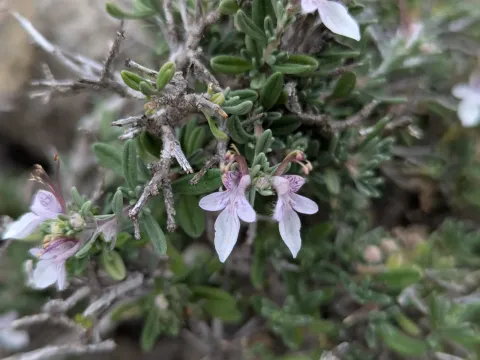
Short-leaved germander
Teucrium brevifolium
Short-leaved germander (Teucrium brevifolium) is a perennial evergreen subshrub belonging to the Lamiaceae family. Native to the Mediterranean region, it thrives in rocky, calcareous terrain and is well-adapted to extreme environmental conditions.
What the section contains
Short-leaved germander
The plant requires full sun exposure to flourish and maintain its compact, dense structure. Insufficient light levels often lead to sparse foliage and significantly reduced levels of essential oils, which are crucial for its medicinal properties.
Soil requirements are relatively modest; the plant demands excellent drainage. Alkaline or neutral soil pH levels are optimal, and the species is highly sensitive to waterlogging, which often results in root rot and plant mortality.
In terms of agricultural management, Teucrium brevifolium is considered low-maintenance. Irrigation should be restricted to the initial establishment period, as the plant possesses natural physiological adaptations to survive drought.
The plant serves multiple purposes in modern agriculture, including being a source for botanical extracts and a valued ornamental component for xeriscaping, where it provides structural integrity and aesthetic appeal without requiring intensive care.
The primary threats to Teucrium brevifolium are fungal infections caused by high atmospheric humidity and poor air circulation. Proper plant spacing is essential to ensure adequate airflow and minimize the risk of mildew development.
Pests such as spider mites may become problematic during periods of intense heat and low humidity. Monitoring leaf undersides for signs of damage is recommended to trigger early intervention using organic control methods.
Root system health is heavily dependent on soil aeration. Over-fertilization, especially with nitrogen-heavy products, encourages excessive vegetative growth that is more susceptible to bacterial infections and mechanical damage.
Insects like aphids can occasionally infest tender growth. While usually not fatal, severe infestations can stunt development, necessitating the use of horticultural soaps or essential oil-based deterrents to protect the crop.
Weed management during the early growth stage is the most critical cultural activity. Once fully established, the shrub creates a dense enough canopy to naturally suppress most competitive weeds in its vicinity.