
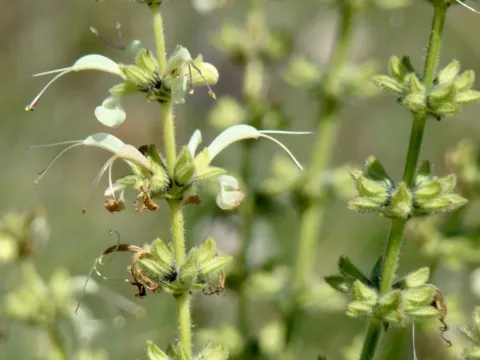
Salvia staminea
Salvia staminea
Sowing Salvia staminea should be performed in early spring once the soil temperature is consistently above 10 degrees Celsius. The seeds require a well-prepared seedbed to ensure uniform germination, as their small size makes them sensitive to planting depth.
What the section contains
Salvia staminea
The ideal depth for sowing is approximately 1 to 2 centimeters. Ensuring proper soil-to-seed contact via light rolling after sowing helps to improve the overall emergence rate in field conditions.
For commercial cultivation, row spacing of 45 to 60 centimeters is recommended to facilitate effective mechanical weeding and ensure that the plants have sufficient space to develop their aerial parts.
Moisture management is crucial during the germination phase. While the plants are hardy once established, seeds need a consistent level of soil moisture to initiate the metabolic processes required for sprout development.
In regions with shorter growing seasons, starting the plants as transplants in a nursery can be a viable alternative to direct seeding, allowing for a more robust start to the growing season.
Salvia staminea is a member of the Lamiaceae family and is known for its ability to thrive in rocky and arid environments. It prefers full sun exposure, which is essential for the accumulation of essential oils.
Regarding soil preferences, this species performs best in well-drained, sandy loam or gravelly soils. It is highly intolerant of waterlogged conditions, which can quickly lead to root decay.
The crop is highly drought-tolerant, reflecting its natural habitat as a xerophyte. It is an excellent choice for sustainable agriculture in water-scarce regions, provided the soil drainage is managed correctly.
Neutral to slightly alkaline pH levels are generally considered ideal for this species. If the soil is too acidic, liming should be performed well in advance of the planting season to improve nutrient availability.
Temperature range tolerance is broad, but the plant exhibits the most vigorous growth in climates with warm days and cool nights. It is relatively winter-hardy once the root system has matured.
Yield potential is highly dependent on the quality of the stand and the agronomic practices applied. Peak productivity is typically observed from the second to the fourth year of the crop's lifecycle.
Optimizing yield involves careful management of soil nutrients. While Salvia staminea is adapted to nutrient-poor soils, modest applications of balanced fertilizers can significantly increase the total biomass produced.
The harvestable yield consists primarily of the leaves and flowering tops. The timing of the harvest is the most significant factor influencing the final quantity and quality of the raw material collected.
Efficient harvesting techniques, including the use of specialized harvesting machines, can minimize post-harvest losses and maintain the integrity of the plant tissues, which is vital for oil preservation.
Strategic irrigation during the peak vegetative phase, although not strictly required, can enhance total yield in areas with extreme summer drought, ensuring the plant reaches its full biomass potential.
Root rot is the most common threat, usually triggered by poor drainage or excess soil moisture. Improving site drainage and controlling irrigation are the primary preventive measures available to farmers.
Insect pests, such as aphids, can infest the plants during hot, dry spells. Integrated Pest Management (IPM) practices, including the use of natural predators, are preferred to maintain the quality of medicinal harvests.
Fungal diseases like powdery mildew may affect the foliage, especially in dense plantings with poor airflow. Thinning out the rows to increase ventilation is an effective cultural control method.
Competition from weeds is significant, especially in the first few months after planting. Mechanical cultivation between rows is standard practice to suppress weed growth before the Salvia canopy closes.
Leaf spots caused by various pathogens can occur under humid conditions. Regular sanitation, which includes removing dead plant debris at the end of the season, helps reduce the inoculum load for the next year.
Harvesting is ideally conducted during the peak flowering stage when the concentration of aromatic compounds is at its highest. This window is often short, requiring efficient management of labor and equipment.
Post-harvest processing should begin immediately to prevent fermentation and the degradation of volatile compounds. Drying at controlled temperatures between 40 and 45 degrees Celsius is standard practice.
For large-scale operations, mechanical harvesters are calibrated to cut at a specific height above the ground to promote regrowth for subsequent harvests, ensuring the longevity of the perennial stand.
Once dried, the raw material should be handled carefully to avoid shattering, as the leaves are fragile. Proper cleaning and grading are necessary to meet the standards of the essential oil and herb industry.
Storage must be in cool, dark, and dry conditions to prevent oxidation and loss of essential oil potency. Airtight containers are recommended to ensure long-term stability and market value.