
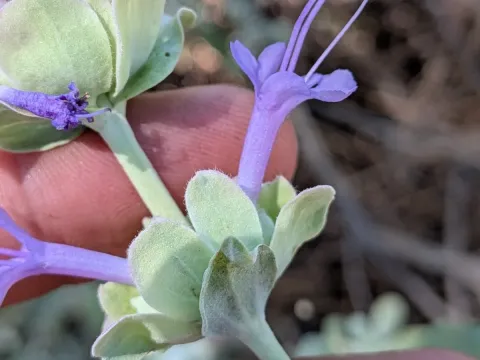
Salvia pachyphylla
Salvia pachyphylla
Salvia pachyphylla, commonly known as rose sage, is a perennial subshrub belonging to the Lamiaceae family, native to arid regions of the southwestern United States.
What the section contains
Salvia pachyphylla
Propagation is typically achieved through seeds, which should be sown in a well-drained medium during the spring once the threat of frost has completely passed.
For commercial production, starting plants in nursery trays and transplanting them into the field creates a more uniform crop compared to direct seeding.
The seeds are relatively small and require shallow burial, just beneath the surface of the soil, to ensure they receive enough light and moisture to germinate successfully.
Adequate spacing between rows, typically around 60-90 cm, is essential to allow for proper airflow and to facilitate mechanized weeding and maintenance operations.
This species is highly adapted to drought conditions and thrives in full sun, making it an excellent candidate for regions with scarce water resources.
The soil must be exceptionally well-draining, such as sandy or rocky substrates, to prevent root rot and other physiological issues related to moisture stress.
Salvia pachyphylla prefers a neutral to slightly alkaline pH, typical of the soils found in its native chaparral and desert mountain environments.
While the plant is cold-hardy once established, young transplants require careful monitoring during their first winter to ensure survival against extreme fluctuations.
Minimal fertilization is usually sufficient, as excessive nutrients can result in lush foliage growth at the expense of oil concentration and overall plant vigor.
Fungal pathogens such as powdery mildew represent the primary threat to the crop, especially in environments where humidity is higher than the plant's natural preference.
Pests including aphids and spider mites may infest the plant during the growing season, necessitating integrated pest management strategies to protect the crop.
Competition from invasive weeds can severely hinder the growth of young sage plants, requiring mechanical or manual intervention during the first year.
Proper field hygiene, including the removal of dead or infected plant debris, is crucial for preventing the buildup of inoculum for common soil-borne diseases.
Monitoring for signs of stress, such as yellowing leaves or stunted growth, allows producers to adjust irrigation or nutrient levels before significant damage occurs.
Harvesting for essential oils or medicinal use should occur during the full bloom stage when the secretory glands on the leaves and flowers are most productive.
The stems should be cut using clean, sharp blades, leaving enough of the lower plant structure to encourage regrowth and secondary production in subsequent years.
Post-harvest processing involves rapid transport to drying facilities where air circulation is maintained to preserve the integrity of volatile aromatic compounds.
Drying temperatures must be strictly controlled, as heat exceeding 40 degrees Celsius can cause the degradation of delicate oils, significantly reducing market value.
Once dried to the appropriate moisture content, the sage should be processed and packaged in airtight containers to maintain its medicinal and aromatic potency.