
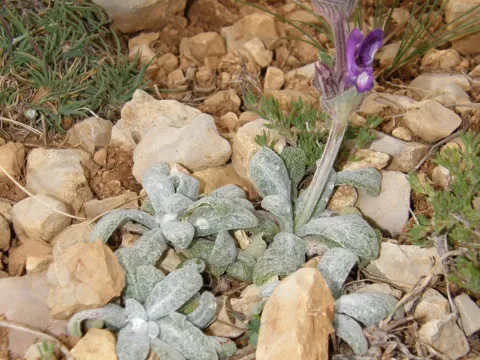
Salvia phlomoides
Salvia phlomoides
Salvia phlomoides belongs to the Lamiaceae family. It is a perennial herbaceous plant valued for its essential oil properties and medicinal potential in professional agriculture.
What the section contains
Salvia phlomoides
The sowing process begins in early spring once soil temperatures reach at least 10°C. Seeds require a shallow sowing depth of approximately 1 cm, as they are sensitive to deep burial which hinders germination.
Optimal row spacing should be between 45 and 60 cm to allow for proper airflow and mechanical weeding operations. This spacing helps maintain a healthy microclimate within the crop stand.
In the first few weeks, it is crucial to keep the topsoil consistently moist. Since the seeds are small, the germination phase is a vulnerable period that requires careful irrigation management.
While direct seeding is common, some producers use seedling transplants to ensure a more uniform stand, especially in regions with short growing seasons or unpredictable spring weather.
Salvia phlomoides thrives in full sun. Exposure to direct sunlight is essential for the synthesis of secondary metabolites, including the essential oils that define its market value.
The plant prefers light, well-draining soils. Sandy loams or rocky substrates are ideal because they prevent water stagnation, which is the primary cause of root-related diseases in this species.
This crop is highly drought-tolerant once established. However, to achieve maximum yield, supplemental irrigation during the peak growing phase is beneficial, especially if rainfall is sparse.
Soil pH should ideally be neutral or slightly alkaline. Acidic soils can restrict nutrient uptake and leave the plants susceptible to fungal infections and poor development.
Balanced fertilization is key. While nitrogen promotes leafy growth, an emphasis on potassium and phosphorus is necessary to improve cold hardiness and the quality of the essential oils produced.
The yield of Salvia phlomoides depends heavily on plant age and soil quality. In a well-managed plantation, yields of dry biomass typically range from 1.5 to 2.5 tons per hectare.
Plant productivity peaks during the second and third years. During the first year, farmers must prioritize root development over early harvesting to ensure the long-term sustainability of the plantation.
The accumulation of essential oil is sensitive to environmental factors. Bright, sunny days during the flowering phase contribute significantly to higher oil concentration in the plant tissue.
Crop rotation should be strictly observed, with a break of at least 4 years before replanting Salvia on the same field to maintain soil health and prevent the buildup of pathogens.
Yield quality is determined by testing the concentration of terpenoids. Farmers often work closely with distillers to time harvests when the biological activity of the plant is at its peak.
Root rot is the most serious threat, especially in soils with poor drainage. Once established, these infections are difficult to control, making preventive measures the primary line of defense.
Pests like spider mites and certain lepidopteran larvae can cause substantial damage to the leaves and floral parts. Integrated pest management (IPM) is recommended to minimize chemical use.
Powdery mildew may occur if the planting density is too high, preventing air circulation. Thinning out the rows and ensuring adequate spacing is the best cultural control method.
Weed control is critical, particularly for young plants that can be easily outcompeted. Regular inter-row cultivation is standard practice to eliminate invasive species before they seed.
Regular field scouting allows farmers to identify early signs of fungal disease or pest infestation, enabling timely intervention and protecting the profitability of the crop.
Harvesting is performed at the peak of the flowering stage, when the concentration of aromatic compounds is highest. Harvesting too early or too late will negatively impact the quality.
The plants are typically mowed at a height of 10–15 cm. This ensures that the root system remains undamaged, allowing for regrowth and potential multiple harvests over several years.
Immediate processing is essential. Freshly cut biomass must be transported to a drying facility without delay to prevent fermentation and the loss of volatile essential oils.
Drying is best accomplished in controlled-temperature environments (below 40°C) with high airflow. Rapid, high-heat drying is not recommended as it degrades the chemical composition.
After drying, the material is cleaned and packaged in breathable containers. Proper storage in a cool, dark, and dry place is necessary to maintain the shelf life and potency of the herb.