
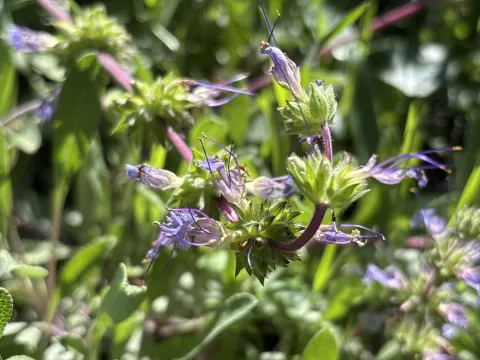
Creeping sage
Salvia sonomensis
Creeping sage (Salvia sonomensis) is a perennial, evergreen subshrub belonging to the Lamiaceae family. Native to California, this plant is well-regarded for its low-growing, mat-forming habit, making it an excellent choice for naturalizing landscapes.
What the section contains
Creeping sage
The plant features aromatic, leathery, and slightly hairy leaves that contribute to its distinctive appearance. During the flowering season, it produces spikes of delicate, lavender-blue flowers that stand out against the greyish-green foliage.
To thrive, Salvia sonomensis requires full sun exposure and extremely well-drained soil. It is particularly well-suited for rocky, sandy, or decomposed granite soils, which mimic its natural environment in the foothills of California.
This species is highly drought-tolerant once established and does not tolerate high humidity or heavy clay soils. Gardeners should avoid summer irrigation, as the plant prefers dry dormancy during the hottest months to prevent root rot.
In landscaping, creeping sage is highly valued for its ability to suppress weeds and stabilize soil on banks and slopes. Its nectar-rich flowers make it a highly desirable plant for attracting pollinators, including native bees and various butterfly species.
The primary threat to the health of Creeping sage is fungal disease, particularly when the plant is grown in soil that retains too much moisture. Root and crown rot are common if the drainage is inadequate.
Insects like aphids can occasionally infest the plant, especially during spring flushes. While the plant is generally hardy, heavy infestations can cause stunted growth or deformities in the new foliage.
Spider mites are another potential pest, particularly in regions with very dry summers. They tend to congregate on the underside of leaves, causing a mottled appearance and overall decline in plant vigor.
Powdery mildew may occur if the plants are placed in areas with poor airflow or overcrowded conditions. Maintaining proper spacing is essential to ensure that leaves dry quickly after morning dew.
Effective management includes using inorganic mulch like gravel or crushed rock, which prevents direct contact between the plant foliage and wet soil. Avoiding over-fertilization is also recommended to prevent weak, succulent growth susceptible to pests.