
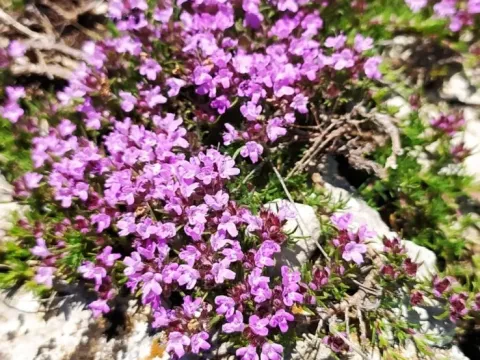
Crimean thyme
Thymus tauricus
Sowing Crimean thyme seeds is typically performed in late autumn or early spring. Autumn sowing allows the seeds to undergo natural stratification, which promotes more uniform germination in the following spring season.
What the section contains
Crimean thyme
Due to the extremely small size of the seeds, they should be sown at a shallow depth, not exceeding 0.5–1 cm. To prevent the seeds from washing away during irrigation or rain, it is advisable to mulch the soil surface with a thin layer of sand or well-rotted organic matter.
When using a nursery approach, seeds are sown in greenhouses during March. The seedlings are transplanted to the open field at the 3–4 leaf stage, usually by late May, once the risk of spring night frosts has completely passed.
The planting pattern should be designed to allow for mechanical inter-row cultivation. An optimal spacing is considered to be 45–60 cm between rows and 15–20 cm between individual plants within each row to ensure adequate space for growth.
Crimean thyme can also be effectively propagated through vegetative methods such as division of established clumps or stem cuttings. This method ensures that all desirable characteristics of the parent plant are preserved and speeds up the establishment of a productive crop.
Crimean thyme (Thymus tauricus) belongs to the Lamiaceae family and is a heliophilic plant. It requires maximum exposure to direct sunlight to ensure the proper synthesis and accumulation of essential oils within the leaves and flowers.
The plant has moderate soil requirements, preferring light, well-drained sandy or sandy-loam soils with a neutral to slightly alkaline pH. Heavy clay soils that tend to become waterlogged are unsuitable and can lead to root system failure.
While the plant is highly drought-tolerant, regular irrigation is essential during the first year of establishment. Once mature, excessive soil moisture should be avoided, as it can decrease the concentration of active compounds and promote decay.
The climate requirements are characterized by temperate conditions. The plant is hardy and well-adapted to the Crimean regional climate, surviving winter temperatures effectively provided that the planting site has good drainage to prevent icing.
Effective weed management is a critical aspect of thyme cultivation. The plants grow relatively slowly during the early establishment phase, making it essential to keep inter-row areas free of weeds to reduce competition for nutrients and space.
The yield of essential oil raw material depends on the age of the plantation and the level of management. Maximum productivity is typically observed from the third to the fourth year after the initial planting of the field.
On average, with proper care and technology, one hectare of plantation can produce between 2 to 4 tons of green mass per harvest. The total essential oil content is strongly influenced by the growth phase and the local weather conditions.
The highest concentration of bioactive compounds is observed during the peak flowering phase. Harvesting during this precise window is necessary to obtain high-quality material for the pharmaceutical and cosmetic industries.
A Crimean thyme plantation can remain productive for 5–7 years. After this period, the bushes typically show signs of aging and reduced biomass production, which signals the need for site renewal and replanting.
To optimize yields, balanced fertilization focusing on potassium and phosphorus is recommended. These nutrients improve root development, woody stem hardening, and overall cold tolerance during the winter months.
The primary threats to Crimean thyme are fungal diseases caused by poor drainage or excessive humidity. Fusarium wilt and root rots can quickly destroy sections of the plantation, making drainage control a top priority for growers.
Powdery mildew can affect the foliage during periods of high atmospheric humidity and frequent rain. Prevention is focused on proper plant spacing and ensuring good airflow across the plantation to minimize moisture accumulation on the leaves.
Insect pests, including weevils and certain types of caterpillars, can damage the leaves and flower heads. When managing these pests, biological controls are preferred to maintain the chemical purity required for essential oil extraction.
- Maintain crop rotation to avoid pathogen buildup in the soil.
- Perform regular shallow cultivation to improve soil aeration.
- Immediately remove and destroy any infected plants to prevent the spread of disease.
Harvesting Crimean thyme involves cutting the green aerial parts of the plant. It is recommended to cut the stems at a height of 10–15 cm from the ground, which promotes vigorous regrowth and ensures a healthy plant for future harvests.
The timing of the harvest is crucial and should coincide with the full flowering stage. In the Crimean region, this typically occurs during the summer months when the oils are at their most concentrated levels.
Harvested material must be transported to the processing facility or drying area immediately. Allowing the green mass to sit in piles can lead to heating and fermentation, which significantly degrades the quality and scent profile of the oil.
Drying is performed in controlled environments at temperatures not exceeding 40 degrees Celsius. Excessive heat causes the rapid evaporation of volatile components, leading to a loss of the very aromatic and therapeutic properties that make the plant valuable.
Once dried to a stable moisture content of approximately 12–14%, the raw material should be stored in airtight containers in a cool, dark, and dry environment to maintain its quality over an extended shelf life.