
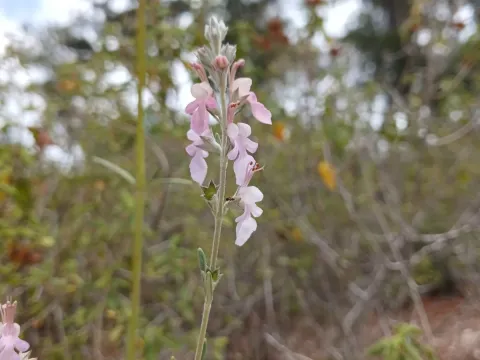
Cretan germander
Teucrium creticum
Sowing Cretan germander, a member of the Lamiaceae family, is best performed in early spring once soil temperatures reach a stable 12-15 degrees Celsius. The seeds exhibit optimal germination rates when placed in light, sandy, or well-drained loamy soils that prevent waterlogging.
What the section contains
Cretan germander
For commercial production, a nursery-grown transplant method is preferred to ensure uniform stand density across the field. Seedlings are transplanted into the open field after the risk of late spring frosts has passed, maintaining a spacing of 45–60 centimeters between rows to facilitate airflow.
Selection of the site is critical; this plant requires high levels of solar radiation and protection from cold winds. The species is poorly adapted to water-saturated environments, so heavy clay soils must be amended or raised into beds to ensure adequate drainage for the root system.
Cretan germander is naturally adapted to Mediterranean climates and exhibits significant drought resistance once established. Consequently, excessive irrigation should be avoided, as high soil moisture levels can negatively impact plant vigor and the chemical composition of its essential oils.
The fertilization strategy should be conservative, prioritizing phosphorus and potassium to promote essential oil synthesis and healthy development. Nitrogen application must be carefully monitored, as over-fertilization can lead to lush vegetative growth that dilutes the concentration of secondary metabolites.
This crop has specific soil requirements, preferring calcareous and alkaline soils with good aeration. An optimal pH range of 7.0 to 8.0 is recommended to support robust growth and the accumulation of bioactive compounds within the foliage, which are essential for its medicinal value.
Climate suitability is centered on regions with moderately warm temperatures and mild winters, as the plant possesses only moderate winter hardiness. In regions with harsh winters, protective mulching or thermal insulation for the crown is necessary to ensure the plant's survival through the dormant period.
Full sun exposure is a non-negotiable requirement, as shading significantly reduces the concentration of terpenoids and flavonoids in the plant tissue. The species is well-adapted to the sharp diurnal temperature fluctuations characteristic of rocky slopes and mountainous Mediterranean habitats.
Agricultural management involves regular inter-row cultivation to conserve soil moisture and suppress invasive weed competition. Weeding is particularly crucial during the plant's early establishment phase, as the young germander seedlings do not compete well with vigorous pasture grasses.
From an agricultural perspective, Cretan germander is highly valued as an aromatic and honey-producing crop. Its use in contemporary pharmaceutical research is based on its potent anti-inflammatory properties, making it an attractive niche crop for sustainable and organic farming systems.
Root rot is the primary threat to plantations, usually triggered by poor drainage or over-irrigation. Prevention relies on proper crop rotation and the selection of fields that are free from standing water, which prevents the anaerobic conditions required for fungal pathogens to thrive.
Pests such as aphids and leaf-eating insects pose a risk to young shoots during the rapid growth phase. Integrated pest management using biological controls is the preferred strategy to ensure the medicinal purity of the harvested biomass and to maintain the plant's ecological profile.
Powdery mildew may occur during seasons with high atmospheric humidity, manifesting as a white coating on the leaves. Effective control involves removing infected foliage, thinning the plants to improve ventilation, and ensuring that irrigation practices do not wet the leaf surfaces during evening hours.
Phytophagous insects can occasionally damage flower buds, negatively impacting honey yield and seed production. Weekly monitoring of the crop, especially during the budding phase, is essential to detect pest outbreaks before they result in significant damage to the plant's reproductive structures.
Adherence to standard agricultural regulations, including the timely removal of crop debris and maintenance of optimal planting densities, remains the primary defense against pathogens. Chemical fungicides are generally avoided and are reserved only for emergencies where the entire crop is at risk.
Harvesting is performed during peak flowering, as this period corresponds with the maximum concentration of essential oils in the aerial parts. This timing ensures the highest product quality for the pharmaceutical and perfume industries, where the plant's specific aromatic profile is highly prized.
Stems are cut with sharp tools at a height of 10–15 centimeters above the soil level. This method preserves the woody base of the plant, allowing it to recover quickly and produce healthy regrowth for subsequent harvest cycles in multi-year production systems.
The harvested green biomass must be dried immediately in shaded, well-ventilated areas or in professional drying chambers at temperatures not exceeding 40 degrees Celsius. High temperatures cause the volatile components of the essential oils to evaporate, significantly reducing the market value.
Once fully dry, the product is cleaned of impurities, sorted, and packed into hermetically sealed containers. Proper storage in a dry, dark place is mandatory to prevent degradation of the herb's color and fragrance, ensuring a long shelf life for the medicinal raw material.
Transportation of the finished product requires extreme caution, as dried flowers and leaves are fragile and prone to crumbling if handled roughly. Standardized testing for active ingredient content serves as the final step in the quality control process before the herb reaches the consumer.