
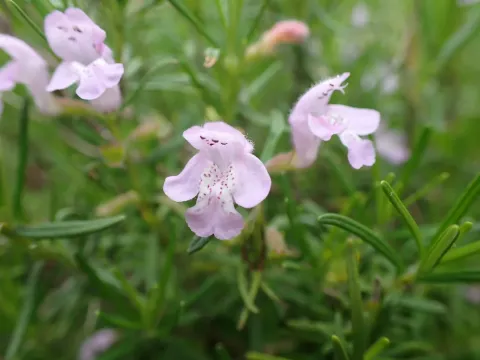
Cumberland rosemary
Conradina verticillata
Cumberland rosemary (Conradina verticillata) is a perennial subshrub belonging to the Lamiaceae family. It is a rare species native to the Cumberland Plateau in Kentucky and Tennessee, where it typically grows on rocky or sandy riverbanks.
What the section contains
Cumberland rosemary
The plant requires full sun exposure to maintain its dense, rosemary-like habit. It is highly sensitive to shade, which frequently results in leggy growth and increased vulnerability to disease.
Regarding soil conditions, this crop thrives in well-draining, gravelly, or sandy soils. It is highly adapted to nutrient-poor substrates and does not require frequent fertilization, as excessive nutrients can negatively impact its natural form.
Watering requirements are minimal. Being a drought-tolerant species, it requires deep, infrequent watering only during prolonged dry spells. The root system must remain dry to avoid physiological distress.
Cultural care involves maintaining excellent airflow around the plant. It is an ideal candidate for xeriscaping or rock gardens where the microclimate mimics its native riparian habitat.
Root rot is the most significant threat to Conradina verticillata. This condition is almost exclusively caused by overwatering or poorly draining soil media, leading to rapid plant decline.
Powdery mildew can occur if the plant is grown in conditions with low light and high humidity. Proper spacing is essential to ensure adequate cross-ventilation through the dense foliage.
Pests such as aphids and spider mites are common concerns. These pests thrive in dry environments and can quickly infest tender shoot tips, necessitating early intervention with biological controls.
Fungal leaf spots may develop during unusually wet seasons if the foliage is not allowed to dry completely. Avoid overhead watering to mitigate the risk of pathogen transmission.
To protect the plant, growers should avoid heavy organic mulches that retain moisture against the crown. Inorganic mulch, such as pea gravel or crushed stone, is the preferred method for maintaining plant health.