
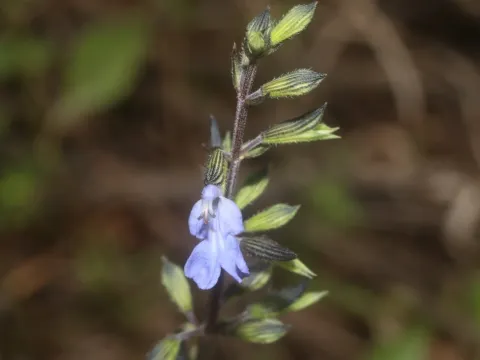
Late sage
Salvia serotina
Late sage (Salvia serotina) is a perennial herbaceous plant belonging to the Lamiaceae family. Because it requires a consistent environment to establish its root system, spring sowing is recommended once soil temperatures reliably exceed 10 degrees Celsius.
What the section contains
Late sage
For professional agricultural production, greenhouse seedling propagation is often preferred. Starting seeds indoors 6 to 8 weeks before the last expected frost allows for a more uniform crop stand and reduces the mortality rate of young plants in the field.
Seeds should be sown at a shallow depth of approximately 0.5 to 1 centimeter. Consistent soil moisture is critical during the germination phase, which typically lasts two to three weeks under optimal conditions.
Proper plant spacing is essential for air circulation. Row spacing of 50 centimeters with 30 centimeters between individual plants ensures that the crop has enough space to mature without developing fungal diseases caused by humidity.
Regular monitoring of the germination beds is necessary. If the soil surface dries out too quickly, misting or drip irrigation systems should be employed to maintain the required hydration levels for the delicate seeds.
Late sage thrives in well-drained, sandy loam soils. It is highly sensitive to waterlogging, as standing water in the root zone quickly leads to root rot and diminished plant vigor.
Sunlight is a primary requirement for this species. It should be grown in full sun locations to maximize the biosynthesis of essential oils, which are highly valued in both the culinary and cosmetic industries.
The plant is drought-tolerant once established but benefits from consistent moisture during its vegetative growth phases. During peak summer heat, irrigation may be necessary to maintain yield quality.
Soil pH should ideally range from neutral to slightly alkaline. Preparing the soil with organic matter prior to planting can help improve both nutrient availability and the structure of the soil profile.
Consistent temperature maintenance is important. While the plant can withstand moderate fluctuations, it is best grown in climates where sudden, extreme temperature drops are infrequent during the active growing season.
The most significant threats to Salvia serotina include powdery mildew and various forms of leaf spot. These diseases are usually triggered by poor drainage or excessive humidity within the canopy.
Pests such as aphids and spider mites are common in sage fields. These insects feed on the plant sap, which can cause leaf yellowing and reduce the overall aromatic quality of the harvested material.
Integrated pest management (IPM) practices, including the use of beneficial insects or organic biopesticides, are highly recommended to keep the crop healthy without leaving chemical residues on the leaves.
Good field hygiene is essential for disease control. Removing fallen leaves and infected plant parts from the field after the growing season helps prevent the overwintering of pathogens.
Crop rotation is a vital strategy. Planting sage in the same field for multiple consecutive years increases the risk of soil-borne diseases, which can decimate the long-term productivity of the plantation.
Harvesting should be timed to coincide with the peak flowering period, which is when the plant contains the highest concentration of its primary essential oil components and aromatic oils.
Mechanical or manual harvesting involves cutting the upper, more tender portions of the stems. Care must be taken to leave enough vegetative growth on the lower plant parts to ensure a rapid recovery.
Post-harvest processing is critical. The cut stems must be moved to a shaded, well-ventilated area for drying. High temperatures should be avoided to prevent the rapid evaporation of the volatile aromatic compounds.
Once dried to the appropriate moisture content, the crop should be stored in cool, dark, and airtight containers. This protects the product from environmental degradation and retains its high market value.
Quality control during the harvest process involves cleaning the material of any weeds or debris. Consistent sorting ensures that only the pure, high-quality plant matter reaches the drying facilities.