
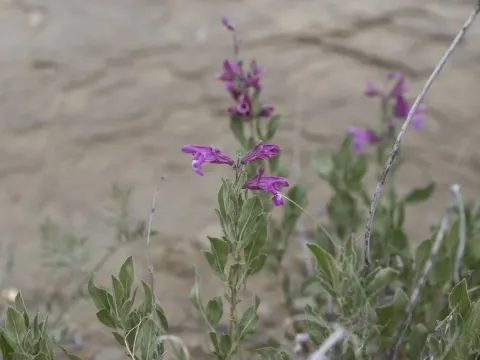
Hydrangea-leaved sage
Salvia hydrangea
Hydrangea-leaved sage (Salvia hydrangea) is a perennial herbaceous plant belonging to the Lamiaceae family. Native to mountainous regions, particularly in Iran, this plant has adapted to rugged environments and is increasingly recognized for its unique chemical profile.
What the section contains
Hydrangea-leaved sage
Sowing is typically performed in early spring once the soil temperature consistently reaches 10–12°C. In regions with milder climates, autumn sowing is also a viable option to ensure early establishment of the crop in the following season.
For commercial production, seedling transplantation is recommended over direct seeding. Seedlings should be raised in controlled environments and transplanted to the field at the 3–4 true leaf stage to ensure high survival rates and uniform stand density.
Seeds are small and should be sown at a depth of 1–1.5 cm. Proper soil contact is essential for germination; light rolling of the soil surface after planting can improve moisture capillary action and support early root development.
The crop exhibits slow initial growth during the first year of its life cycle. Consequently, fields must be kept clear of weeds to prevent competition for light, water, and nutrients, which is crucial for the long-term success of the plantation.
Salvia hydrangea requires full sun exposure to thrive. High levels of solar radiation are necessary for the plant to accumulate its secondary metabolites, including essential oils, which define its economic and medicinal value.
The plant performs best in well-drained, sandy loam or loamy soils. Drainage is the single most critical factor in site selection; the plant is highly susceptible to root rot if exposed to waterlogged conditions for extended periods.
Soil pH should ideally be neutral or slightly alkaline. While the species is somewhat tolerant of nutrient-poor soils, applying balanced fertilizer containing potassium and phosphorus can significantly enhance plant vigor and winter hardiness.
Although it possesses natural drought-tolerance mechanisms, supplemental irrigation during the peak flowering stage can substantially increase biomass yield. Water application must be precise to avoid oversaturation of the root zone.
The species displays moderate cold tolerance, but extreme temperature fluctuations in winter can damage the plant crown. In colder latitudes, providing organic mulch can protect the root system and ensure successful regrowth in the spring.
Fungal diseases, including powdery mildew and Fusarium wilt, represent the primary biological threats. These are often triggered by high humidity levels or poor air circulation within the canopy, highlighting the need for proper row spacing.
Root rot caused by water stagnation is a severe threat in clay-heavy soils. Preventive measures include soil amendment with sand or grit to improve aeration and the installation of effective drainage systems in the plantation area.
Pests such as aphids and spider mites may infest the plants during hot and dry spells. Because the crop is intended for medicinal or aromatic use, integrated pest management (IPM) strategies, including the use of beneficial insects, are preferred over synthetic pesticides.
Weed control is vital, particularly in young plantations. Mechanical cultivation between rows is recommended to manage invasive weeds while simultaneously improving soil aeration and moisture retention near the roots.
Slugs and snails can cause damage to young shoots in early spring. Regular monitoring and the application of physical or environmentally safe barriers can help mitigate this risk during the early growth phase of the plants.
The optimal harvest time is during the peak flowering period, when the concentration of essential oils is at its maximum. Harvesting at the right phenological stage is essential for meeting the quality standards of the pharmaceutical and cosmetic industries.
The harvest involves cutting the aerial parts of the plant, including flowers and upper leaves. Operations should be conducted in the morning, after the dew has evaporated, to ensure the highest potential volatile compound yield.
Drying must be performed in a cool, well-ventilated area or specialized industrial dryers at temperatures not exceeding 40°C. Excessive heat will cause the rapid loss of volatile aromatic compounds and degrade the quality of the raw material.
Once dried, the product should be packed in airtight, light-protected containers to prevent moisture absorption and oxidation. This step is critical for maintaining shelf-life and chemical stability for commercial distribution.
The economic utilization of Salvia hydrangea includes high-value essential oil extraction, herbal tea production, and as an ingredient in specialized health supplements, providing farmers with a lucrative niche crop opportunity.