
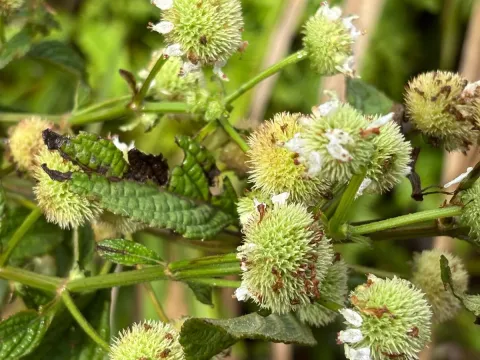
Hyptis
Hyptis
The sowing time for Hyptis depends heavily on the specific region and its climatic conditions. In tropical growing areas, seeds are sown at the beginning of the rainy season, which provides the necessary moisture for germination and early seedling establishment.
What the section contains


Hyptis
Successful crop establishment requires well-warmed soil, as Hyptis seeds are sensitive to cold temperatures. It is recommended to sow seeds at a shallow depth, no more than 1–2 centimeters, to facilitate an easy emergence of the sprouts to the surface.
The planting pattern varies depending on the purpose of cultivation, whether for green biomass or seed production. A row cropping method with spacing up to 45–60 centimeters is generally considered optimal to allow for effective weed control and crop management.
Proper soil preparation is a critical step, ensuring the seedbed is loose and free from weeds. Hyptis grows slowly in its initial stages, so removing competitive vegetation early is vital for high final yields.
In commercial cultivation, adhering to a sound crop rotation schedule is important. Avoid planting Hyptis on the same field more than once every 3–4 years to prevent the buildup of soil-borne pathogens and nutrient depletion.
Hyptis belongs to the Lamiaceae family and is inherently thermophilic. The crop thrives in well-lit areas with long daylight hours, which are essential for its vigorous growth and the accumulation of secondary metabolites, such as essential oils.
While the plant is not overly demanding regarding soil type, it performs best in light, fertile loamy soils with excellent drainage. Waterlogging in the root zone can quickly lead to rot and crop failure.
The optimal temperature range for growth is between +20 and +30 degrees Celsius. While Hyptis shows some tolerance to short-term drought, it requires consistent moisture during its active vegetative growth phase to maximize yield potential.
The crop responds positively to organic and mineral fertilizers, particularly those rich in phosphorus and potassium. Nitrogen applications should be managed carefully to avoid excessive vegetative growth at the expense of floral development.
The ideal soil pH is neutral or slightly acidic. On highly saline or waterlogged soils, Hyptis will show stunted growth and will fail to provide an economically viable commercial harvest.
Yields of Hyptis vary depending on the specific species, as the genus includes a wide range of oil-bearing and technical plant forms. With proper agronomic management, growers can achieve consistent yields for both biomass and seed production.
Essential oil-bearing species are cultivated primarily for their high-value oils, with concentrations in the leaves and inflorescences fluctuating depending on the plant's growth stage. Harvesting at the peak of flowering ensures the highest output of aromatic components.
Oilseed varieties of Hyptis are of increasing interest to the food and cosmetic industries. These seeds contain significant amounts of fatty acids, making them a promising sustainable raw material for industrial oil extraction.
Regular cultivation between rows and supplementary irrigation during dry periods are key factors in boosting productivity. Modern fertilization methods, tailored to the specific needs of the crop, can significantly increase total output compared to extensive farming methods.
Yield statistics differ greatly by region; however, with intensive cultivation practices, the crop demonstrates high economic viability due to its relatively low maintenance requirements and the increasing demand for its natural chemical compounds.
Primary pests of Hyptis include various insects that attack the foliage during the active vegetative phase. Specific threats include various species of moths and leaf beetles, which can significantly reduce the photosynthetic area of the plants.
Fungal diseases often develop under conditions of poor humidity control. Powdery mildew and various types of root rot are the most common issues encountered when crops are grown in humid, poorly ventilated environments.
Nematodes can infest the root system, causing slow growth and leaf chlorosis. Management involves proper soil preparation, using disease-free seed stock, and maintaining field hygiene to break the pest cycle.
Integrated pest management is recommended to monitor crop health and employ biological control agents whenever possible. The use of chemical pesticides must be strictly regulated to protect beneficial insects, such as pollinators.
Preventative measures include removing crop residues after harvest and deep autumn plowing. A healthy agronomic environment is the best guarantee for high-quality Hyptis production with minimal expenditure on chemical inputs.
Harvesting Hyptis is scheduled according to the intended final use. For essential oil extraction, the biomass is typically mown during the peak flowering period, when the concentration of aromatic compounds is at its highest.
If the goal is seed production, harvesting should begin once the inflorescences start to turn brown. It is crucial to avoid over-ripening, as many Hyptis species are prone to natural seed shattering at the slightest mechanical disturbance.
Mechanized harvesting requires precise machine settings to minimize post-harvest losses. A two-stage harvesting process is often used, involving windrowing followed by threshing once the material has sufficiently matured.
Post-harvest, seeds must be cleaned and dried immediately to moisture levels suitable for long-term storage. The seed material should be kept in dry, well-ventilated storage facilities at a stable temperature.
Green biomass intended for processing must be delivered to primary processing facilities as quickly as possible. This prevents the loss of volatile essential oil components caused by fermentation and self-heating within the plant mass.