
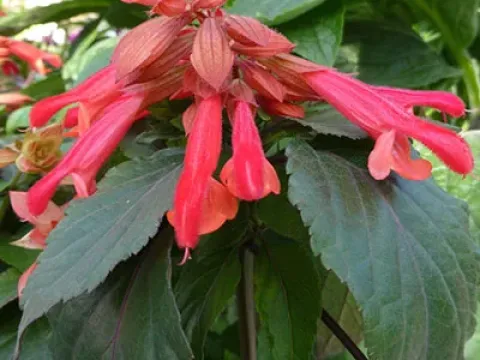
Hybrid sage
Salvia hybrids
Hybrid sage, belonging to the Lamiaceae family, is a perennial crop resulting from the cross-breeding of various species to optimize essential oil production and ornamental traits. Sowing in open fields is typically scheduled for spring once the soil temperature consistently reaches 10-12 degrees Celsius.
What the section contains
Hybrid sage
To ensure robust development, nursery cultivation in trays is recommended about 8 weeks before the intended transplanting date. Seeds should be sown at a shallow depth of 0.5-1 cm, as adequate light exposure is vital for successful germination.
Spacing requirements vary depending on the end-use, with commercial production favoring a layout that allows for mechanical maintenance and sufficient airflow between plants, typically with 45-60 cm row spacing.
Vegetative propagation via cuttings is a common practice for this hybrid to maintain genetic uniformity. Cuttings taken in early summer are placed in well-draining rooting media and kept under controlled humidity until roots are fully established.
Fall sowing is also feasible in warmer climates, allowing seeds to undergo natural stratification and emerge early the following spring, which significantly extends the overall growing season of the crop.
This crop demands high light intensity for optimal synthesis of aromatic compounds. Sites should be carefully selected to avoid any shading, ensuring the plants receive at least 6-8 hours of direct sunlight per day.
Soil quality is paramount; hybrid sage thrives in sandy or loamy soils with excellent drainage characteristics. Waterlogging must be strictly avoided, as the root system is highly susceptible to rot when exposed to excessive moisture.
The ideal soil pH range for hybrid sage is between 6.0 and 7.0. Prior to planting, the site should be prepared with organic matter such as mature compost to improve soil structure and nutrient availability throughout the season.
While the plant exhibits moderate drought tolerance once established, consistent soil moisture is required during the initial growth phases and following each harvest to promote vigorous regrowth of the foliage.
Temperature adaptability is generally good, but in northern climates, mulching the root zone is necessary to protect the plant from severe frost, ensuring survival through the dormant winter months.
Yield efficiency in hybrid sage plantations is highest from the second through the fourth year. Proper management of plant density and nutritional balance can significantly impact the total biomass produced per hectare.
The harvest timing is dictated by the flowering phase; essential oil concentration peaks during the onset of mass bloom. Timely harvesting not only maximizes quality but also stimulates the plant to produce secondary flushes of growth.
Under professional agronomic management, dry leaf yields can be substantial, depending on irrigation practices and the specific cultivar used. Regular replenishment of soil fertility post-harvest is essential for maintaining consistent yield levels.
Mechanization of the harvest process is highly beneficial for larger operations. Adjusting cutter bar heights is critical to ensure that enough leaf-bearing stems remain for the plant's recovery and long-term sustainability.
Economic viability is further enhanced by on-site processing facilities, as immediate drying of the raw material prevents the loss of volatile aromatic compounds and degradation of the herb's quality.
Root rot is the most significant pathological threat, usually arising from poor drainage or excessive irrigation. Implementing a strict watering schedule and improving soil permeability are the primary preventive measures.
Powdery mildew may occur in conditions of high atmospheric humidity and stagnant air. Management involves spacing plants correctly to improve air circulation and applying copper-based fungicides when infection risk is high.
Pests such as aphids and spider mites can infest the foliage, particularly in hot, arid conditions. Integrated pest management, including the use of bio-rational pesticides, is preferred to maintain the quality of the medicinal herb.
Slugs and snails can severely damage young plantations in the spring. Barrier methods and targeted applications of iron phosphate-based baits can mitigate these losses without impacting the overall crop health.
Root-knot nematodes can cause systemic issues by damaging the root system. Crop rotation and maintaining soil health are the most effective strategies for preventing nematode outbreaks in sage fields.
The harvest should be conducted on dry, sunny days after the morning dew has completely evaporated to prevent moisture-related quality loss. This is essential for effective drying and mold prevention.
Stems should be harvested at approximately 15 cm above the ground. This ensures sufficient nodal buds are left for regeneration, supporting the plant's ability to produce another harvest in the same season if climatic conditions permit.
Harvested biomass must be dried immediately in a shaded, well-ventilated area or in mechanical dryers at temperatures not exceeding 40 degrees Celsius to preserve the essential oil profiles.
Exposure to direct sunlight during the drying phase must be avoided at all costs, as UV radiation causes rapid degradation of active ingredients and significant discoloration of the leaves.
Once dried to the desired moisture level, the sage should be processed to remove stems, packaged in light-proof and airtight containers, and stored in a cool, dry environment to maintain freshness for extended periods.