
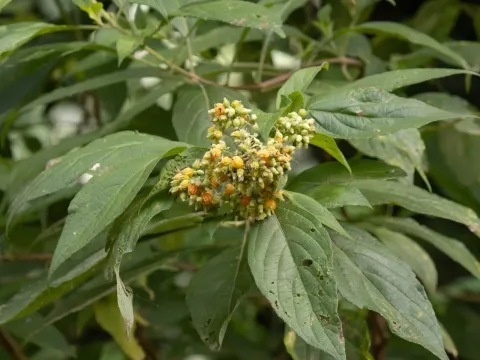
Hoslundia
Hoslundia
Hoslundia, scientifically known as Hoslundia opposita, is a perennial shrub of the Lamiaceae family. It is typically propagated through seeds or stem cuttings, ideally at the onset of the rainy season to ensure optimal initial moisture for root development.
What the section contains

Hoslundia
When starting from seeds, ensure the substrate is kept consistently moist but well-drained. The ideal temperature range for germination is between 22 and 28 degrees Celsius, which allows for rapid seedling emergence in nursery conditions.
Transplanting seedlings to the field requires careful preparation of the soil. A spacing of 70 to 80 centimeters between plants is recommended to accommodate the bush's natural habit of spreading, which prevents overcrowding as it matures.
Vegetative propagation via cuttings is a highly effective method for maintaining genetic uniformity. Cuttings should be taken from healthy, semi-hardwood stems and planted in a sandy-loam mix, ensuring they are shielded from direct harsh sunlight until established.
Regular irrigation during the establishment phase is critical for the survival of young plants. Once the root system is well-developed, the plant demonstrates remarkable resilience and can thrive with significantly less water input.
Hoslundia thrives in sunny locations that receive at least 6 to 8 hours of direct light daily. Adequate sunlight is essential for the synthesis of secondary metabolites that give the plant its characteristic aromatic properties.
The plant is not overly demanding regarding soil fertility but prefers well-drained, sandy or loamy soils. Waterlogging must be avoided at all costs, as the roots are highly susceptible to decay in stagnant water conditions.
Being native to tropical and subtropical regions, Hoslundia is well-adapted to warm climates. It shows excellent drought tolerance, making it an ideal candidate for cultivation in areas with seasonal water scarcity.
Routine agronomic care includes weeding and soil aeration to promote root development. Mulching the base of the plants helps retain moisture during peak summer months and suppresses the growth of competitive weeds.
Occasional fertilization with organic compost or balanced NPK fertilizers before the growth season significantly boosts leaf production. Proper plant nutrition ensures that the shrub remains productive and robust over several years of harvest.
The yield of Hoslundia depends on the age of the plantation and the frequency of pruning. A harvestable quantity of leaves can generally be expected starting from the second year of growth, with yields increasing as the plant expands.
The primary economic output consists of the leaves and tender shoots, which are harvested for medicinal and nutritional purposes. Harvesting is most effective just before the flowering stage when the concentration of essential compounds is highest.
Pruning is the key to managing yield; cutting back the stems stimulates the development of new foliage. A well-managed plantation can provide multiple harvests throughout a single growing season if provided with sufficient water and soil nutrients.
The small berries produced by the shrub are also harvested in many regions. While the volume is lower than leaf production, these fruits have a distinct culinary value and contribute to the overall farm output per hectare.
By implementing a strategic harvesting schedule, farmers can ensure a steady supply of high-quality produce. Sustainable harvesting practices help maintain the plant's health, allowing for sustained productivity over a 5-year cycle.
Hoslundia is generally robust, but it can be susceptible to aphid infestations in crowded or poorly ventilated conditions. Monitoring the underside of leaves for early signs of pests is essential for effective biological control.
Root rot, triggered by over-irrigation, remains the most significant threat to the crop's long-term health. Ensuring proper drainage is the most effective preventative measure against fungal pathogens that colonize the root zone.
During the rainy season, some fungal leaf spots may appear if humidity levels remain excessively high. Improving air circulation by trimming dense foliage can effectively mitigate these issues without the need for synthetic fungicides.
Caterpillars can occasionally cause significant defoliation if left unchecked. Early manual removal or the application of neem-based botanical insecticides are effective strategies to protect the foliage without harming the environment.
Soil-borne nematodes may pose a threat in intensive farming systems. Crop rotation is highly recommended to prevent the buildup of soil pests and to maintain the soil vitality necessary for optimal Hoslundia growth.
Harvesting should be performed manually during the early morning hours once dew has evaporated. This practice minimizes stress on the plant and preserves the integrity of the essential oils found within the leaf tissues.
When collecting shoots, use sharp, sanitized tools to ensure clean cuts, which promote faster healing and rapid regrowth of the plant. Avoid harvesting more than 30% of the total canopy at once to allow the plant to recover effectively.
For fruit harvest, careful selection is required as the berries do not ripen uniformly. Harvesting only fully matured, dark-colored berries ensures the best quality and flavor profile for the end product.
Immediate post-harvest processing involves drying the foliage in a shaded, well-ventilated area. Rapid drying helps lock in the medicinal components and prevents the growth of unwanted molds or bacterial contaminants.
Once dried, the product should be packed in breathable, moisture-proof containers. Storing the harvest in a cool, dark environment maintains the shelf life and potency of the Hoslundia leaves for up to 12 months.