
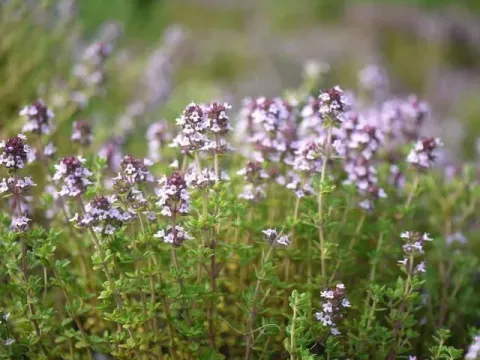
Hybrid thyme
Thymus hybrids
Sowing hybrid thyme on a commercial scale is typically done by starting seeds in greenhouses during late February or early March for later transplanting.
What the section contains
Hybrid thyme
Direct field sowing is possible only after the soil has warmed up sufficiently, which usually occurs during the second half of April or May.
Since the seeds are very small, they should be sown at a depth of no more than 0.5–1 centimeter to ensure consistent germination rates.
For hybrid varieties, vegetative propagation such as division or cuttings is often preferred in spring or autumn to maintain consistent plant traits.
The recommended planting layout for industrial farms is 45–60 centimeters between rows and 20–30 centimeters between plants to ensure good airflow.
Hybrid thyme belongs to the Lamiaceae family and is a sun-loving plant that thrives in open areas with full exposure to direct sunlight.
The crop requires light, well-drained sandy or loamy soils with a pH ranging from neutral to slightly alkaline for optimal growth.
While thyme is highly drought-tolerant, consistent and moderate irrigation during the active growth phase is necessary for a high-quality yield.
The plant is highly sensitive to waterlogging in the root zone, making it crucial to avoid low-lying fields where rainwater or meltwater might accumulate.
The ideal temperature for vegetative growth is between 18 and 25 degrees Celsius, though many modern hybrids show excellent cold resistance.
The yield of hybrid thyme depends heavily on the management practices, plant density, and the number of cuttings performed during the season.
On average, with proper agricultural practices, growers can harvest between 3 and 6 tons of fresh green biomass per hectare per season.
When processed for essential oil, the output usually ranges from 0.5% to 1.5% of the dry matter weight, a vital indicator of economic profitability.
The peak productivity of perennial plantations is generally reached during the second and third years after establishment before yields begin to stabilize.
Regular fertilization with nitrogen and phosphorus during the intensive growth period significantly boosts the total biomass collected at harvest time.
The primary threats to thyme plantations are fungal diseases that emerge due to excessive soil moisture and overcrowded planting conditions.
Common pathogens include Alternaria blight and Fusarium wilt, both of which affect the root system and the aerial parts of the herb.
Common pests include aphids, weevils, and spider mites, which feed on the sap of young leaves and tender shoots, stunting plant development.
Effective weed control and mulching of the rows are essential to reduce the risk of disease spread and decrease the population of insect pests.
- Preventive application of biological fungicides.
- Strict crop rotation schedules to avoid planting on the same soil for 4–5 years.
- Regular sanitary pruning to remove damaged or diseased sections of the plants.
Harvesting should be timed for the phase of maximum flowering, as this is when the concentration of aromatic essential oils in the plant is at its peak.
For industrial processing, the grass is mowed at a height of 5–10 centimeters from the ground, ensuring that the woody stems are not damaged.
Harvested material must be transported to processing or drying facilities immediately to prevent fermentation and loss of active aromatic compounds.
Drying is performed in climate-controlled units at temperatures not exceeding 35–40 degrees Celsius to maintain color and volatile oil quality.
Once harvesting is complete, the field should be weeded and fertilized to ensure the plants recover successfully before the next wintering cycle.