
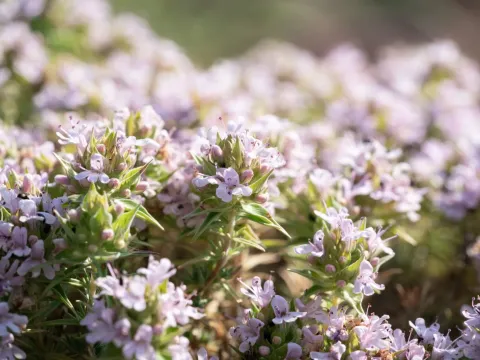
Cilician thyme
Thymus cilicicus
Cilician thyme is a perennial subshrub that is typically propagated through seedlings to ensure high survival rates. Seeds are sown in greenhouses during late winter to provide enough time for the development of robust plants before transplanting.
What the section contains
Cilician thyme
Since the seeds are very small, they require light for germination and should be spread on the surface of the growing medium. Maintaining a constant temperature of about 20 degrees Celsius and moderate humidity is essential for uniform emergence.
Transplanting into the field is carried out after the last spring frost once the soil has warmed up sufficiently. Spacing is usually set at 30-40 cm between plants to ensure adequate nutrient access and to allow for proper air circulation to prevent fungal growth.
Vegetative propagation via cuttings or division of established clumps is also a common practice. This method allows growers to maintain the specific traits of the plant and speeds up the establishment of a productive plantation.
In direct seeding scenarios, thorough soil preparation and weed control are mandatory. Young thyme plants compete poorly with weeds, so keeping the area clean during the first stages of growth is critical for crop success.
As a member of the Lamiaceae family, Cilician thyme is a sun-loving plant that demands maximum exposure to direct sunlight. Insufficient light leads to spindly growth and a significant reduction in essential oil content.
The plant thrives in well-drained, light, sandy, or rocky soils. It is highly intolerant of waterlogging, which often leads to root rot, so ensuring excellent drainage is the most important factor in site selection.
Watering should be balanced and moderate. Once established, Cilician thyme is quite drought-tolerant, relying on its developed root system to survive. Excessive irrigation is more damaging than dry spells for this crop.
The species shows good hardiness, but winter protection might be needed in colder climates or areas without snow cover. Mulching the root zone helps regulate soil temperature and moisture levels throughout the year.
Wind protection is beneficial for keeping the plants warm and preventing damage. Planting on southern-facing slopes is highly recommended to create a favorable microclimate that enhances the production of aromatic compounds.
Cilician thyme reach their peak productivity between the second and third year after planting. During this time, the bushes form a dense biomass, which is the primary focus for commercial harvesting.
The average yield for dried biomass typically ranges between 15 to 25 decitonnes per hectare, depending on soil quality and agricultural management. The harvest of essential oils is strongly correlated with the timing of the cutting during the flowering stage.
Proper nutrient management, particularly the application of potassium, improves both plant resistance to environmental stress and the concentration of active ingredients in the leaves. Excess nitrogen should be avoided to prevent watery growth.
After five years of production, the yields tend to decline as the plants age. Growers usually plan for rotation and the renewal of the field to maintain high profitability and crop quality standards.
Regular pruning of spent flowers can stimulate secondary regrowth. This practice is an essential technique for maximizing the total seasonal yield of green mass, ensuring multiple harvests if the climate allows.
Root rot is the most common disease for Cilician thyme, typically caused by poor drainage and excessive moisture. Prevention through site management is the only effective way to handle this persistent threat.
Powdery mildew can emerge in humid, stagnant conditions, appearing as a white fungal layer on leaves. It hinders photosynthesis and significantly degrades the visual and aromatic quality of the final harvest.
Pests like aphids and spider mites can infest the crop, feeding on the tender shoots and sapping the plant's energy. Early detection and the use of organic control methods are preferred to preserve the crop's medicinal value.
Nematodes are another concern, as they damage the root system and stunt growth. Avoiding long-term monoculture and maintaining soil health through crop rotation are the primary defensive strategies against these soil-borne pests.
Integrated pest management, focusing on biological controls, is highly recommended. Because the crop is destined for consumption, minimizing synthetic pesticide use is standard practice to meet safety certifications.
Harvesting is optimally timed when the plants are in full bloom. This phase coincides with the highest levels of essential oils and other bioactive compounds in the plant's tissues.
The green mass should be cut during dry, sunny weather. Cutting approximately 5-10 centimeters above the soil level ensures that the plant retains enough energy to regenerate quickly for future growth cycles.
Immediate processing after harvest is crucial. The material must be dried in a ventilated area or specialized dryers at temperatures not exceeding 40 degrees Celsius to prevent the loss of volatile aromatic oils.
Once dried, the biomass is cleaned and processed to separate the leaves and flowers from the woody stems. High-quality output requires that the final product is free from foreign matter and coarse stems.
Storage should take place in airtight, light-proof containers in a cool, dry place. This preserves the potent aroma and medicinal efficacy of Cilician thyme, ensuring it remains viable for commercial or pharmaceutical use for a long period.