
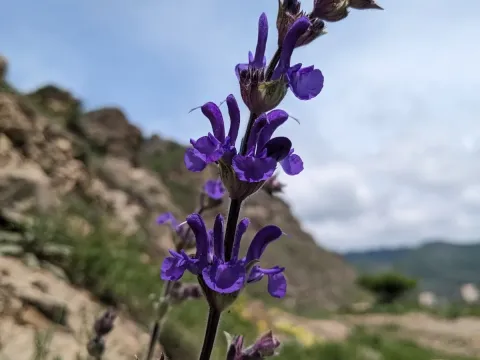
Salvia canescens
Salvia canescens
Salvia canescens is a perennial herbaceous plant belonging to the Lamiaceae family. Sowing is typically carried out in late autumn or early spring when soil temperatures reach 8–10 degrees Celsius.
What the section contains
Salvia canescens
For spring sowing, seeds often require a period of stratification to improve germination rates. The optimal planting depth is 1–2 centimeters, as the small seeds are sensitive to being buried too deeply in the substrate.
Row spacing should generally be maintained at 45–60 centimeters to allow for adequate maintenance of the plantation. During the first year of growth, the plant develops slowly, primarily forming a basal rosette of leaves.
Propagation is also possible via vegetative means, such as division of the rootstock or cuttings during the spring-summer period. This method allows for a faster accumulation of biomass on commercial plots.
To ensure uniform emergence, it is essential to maintain close contact between the seeds and moist soil while preventing the formation of a surface crust after watering or rainfall.
This crop has moderate climatic requirements, preferring sunny sites with protection from strong winds. The plant is highly drought-tolerant, making it suitable for cultivation in arid or semi-arid regions.
It thrives in light, well-drained calcareous soils with a neutral or slightly alkaline pH. Water stagnation in the root zone is detrimental, so areas with high groundwater levels should be avoided.
During the active growing season, the plant requires sufficient sunlight to accumulate essential oils in its aerial parts. Lack of light leads to legginess and a reduction in the concentration of bioactive compounds.
The plant responds well to phosphorus-potassium fertilizers, which strengthen the immune system and promote successful overwintering. Excessive nitrogen may lead to overgrowth of green mass at the expense of raw material quality.
Cold hardiness is generally high; however, in regions with severe, snowless winters, light covering or mulching of the root system is recommended to prevent frost damage.
Yield depends on the age of the plantation and the overall agronomic management. Peak productivity is usually observed in the 3rd to 4th year, when the plant forms a robust bush with numerous flowering stems.
Harvesting is carried out at the peak of mass flowering, when the content of essential oils is at its maximum. During this stage, the plant accumulates the highest concentration of terpenoids and other valuable substances.
Average yield of dry matter varies depending on the region and intensity of care. With proper adherence to agronomic requirements, a stable annual increase in biomass can be achieved.
Economic use includes applications in the pharmaceutical and cosmetic industries. Leaves and inflorescences are used as raw material for producing extracts known for their anti-inflammatory properties.
In addition to its medicinal value, Salvia canescens is popular in landscaping as a decorative-foliage and flowering plant, ideal for rock gardens and arid garden designs.
The main diseases include root rots, which occur due to improper watering and poor soil aeration. Preventing these issues requires strict adherence to crop rotation and careful moisture management.
Powdery mildew can affect the foliage during periods of high humidity. Control measures involve removing infected parts and applying fungicides if necessary.
The most dangerous pests are weevils and spider mites, which can significantly reduce the ornamental value and yield. Insecticide treatments are effective when applied at the first sign of an outbreak.
- Wireworms, which cause damage to the root system of young plants.
- Aphids, which suck sap from young shoots and inflorescences.
- Slugs, which cause damage to foliage in damp weather conditions.
Adherence to agronomic practices, keeping fields free of weeds, and timely cultivation of inter-rows are the best ways to prevent the development of pests and diseases.
Harvesting should be conducted in dry weather, cutting the aerial part of the plant at a height of 10–15 centimeters from the ground. It is important to avoid over-maturation of the inflorescences to preserve oil quality.
Cut material should be immediately transported to a shady, well-ventilated area or a drying chamber at temperatures not exceeding 40 degrees Celsius to prevent the degradation of active components.
Once dried, the raw material is cleaned of impurities and woody stems that have no medicinal value. Storage should be in airtight containers, protected from direct sunlight.
To maintain the plantation for the next year, post-harvest care is crucial, including inter-row loosening and the application of fertilizers if required.
Industrial harvesting can be mechanized using specialized mowers adjusted to the optimal cutting height, which significantly reduces labor costs on large fields.