
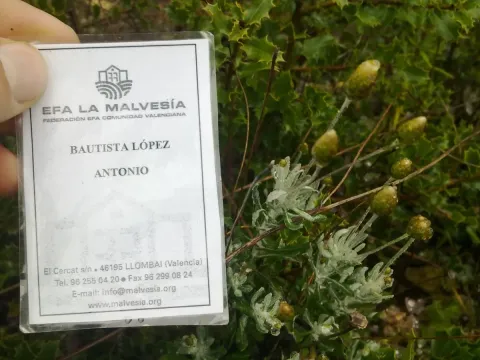
Salvia blancoana
Salvia blancoana
Salvia blancoana is a perennial subshrub belonging to the Lamiaceae family. Native to the mountainous regions of the Iberian Peninsula, it is highly valued for its aromatic properties.
What the section contains
Salvia blancoana
Propagation is typically achieved through seeds or stem cuttings. Seed sowing should be performed in early spring when the soil has warmed up to at least 15 degrees Celsius.
The seeds are small and should be sown at a shallow depth, barely covering them with a thin layer of light substrate to ensure proper germination and light exposure.
When starting seedlings indoors, sow them 6–8 weeks before the last frost to ensure that young plants are robust enough to handle the transplanting process into the field.
Planting density is crucial for long-term production. Maintaining a spacing of 50–70 centimeters between rows allows for sufficient aeration, reducing the risk of fungal diseases.
As a xerophytic plant, Salvia blancoana thrives in full sun, requiring exposure to direct sunlight for the majority of the day to maximize essential oil production.
The ideal soil is rocky, calcareous, and well-drained. The plant is sensitive to waterlogged conditions, which can lead to root system failure and stunted growth.
Moderate moisture is required only during the establishment phase. Once the plant is well-rooted, it exhibits excellent drought tolerance, making it suitable for low-input agriculture.
Soil pH should ideally be neutral or slightly alkaline. Regular weeding is necessary during the early stages of plant development to prevent nutrient competition.
Providing a light mulch can help regulate soil temperature during extreme heat, although care must be taken to keep the crown of the plant dry to prevent decay.
Fungal pathogens, such as powdery mildew, are the most common threats, especially in humid or poorly ventilated environments. Proper airflow is the best preventative measure.
Insects like aphids and spider mites can attack the new growth. Monitoring plant health weekly allows for early intervention with biological controls or targeted treatments.
Root rot is a significant risk in poorly drained soils. Selecting appropriate sites with high slope or rocky composition can naturally mitigate this threat.
Preventative care includes removing dead plant material after the growing season, which helps eliminate potential overwintering spots for various pests and fungal spores.
Maintaining strong plant vigor through balanced fertilization and proper irrigation management naturally enhances the plant's resistance to common environmental stresses.
The harvest occurs during the peak flowering stage, which is when the concentration of essential oils is at its highest in the foliage and floral stalks.
Harvesting should be done on a dry day, cutting the stems approximately 10–15 centimeters above the base to allow for future regrowth of the plant.
Drying must take place in a shaded, well-ventilated area. High temperatures and direct sunlight during the drying process will cause the evaporation of volatile aromatic compounds.
Once dried, the leaves and flowers are stripped from the woody stems and processed according to the end-use requirements, whether for herbal tea or oil extraction.
Proper storage is essential to maintain quality. Airtight containers kept in a cool, dark environment ensure that the aromatic profile remains stable for up to two years.