
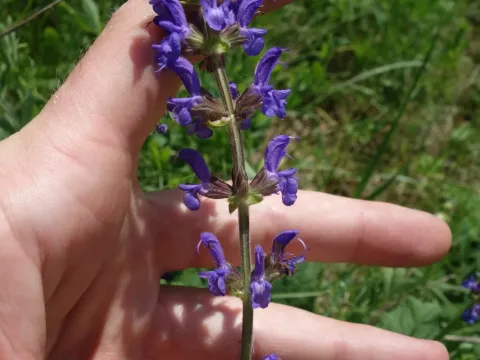
Salvia dumetorum
Salvia dumetorum
Salvia dumetorum, a member of the Lamiaceae family, is propagated primarily by seeds or vegetative division. Sowing usually occurs in late autumn or early spring into well-prepared, aerated soil beds.
What the section contains
Salvia dumetorum
Spring sowing requires seed stratification to maximize germination rates. Seeds should be planted at a depth of 1–2 centimeters, ensuring they remain moist but not waterlogged during the critical early development phase.
Seedlings typically emerge within 2 to 3 weeks depending on soil temperature. It is essential to maintain a weed-free environment during the first months to prevent competition for nutrients and sunlight.
For large-scale cultivation, a planting grid with 60–70 centimeter row spacing is recommended. This layout facilitates mechanical maintenance and ensures adequate airflow between mature plants.
The crop demonstrates robust growth energy, allowing it to establish a strong root system rapidly, which is beneficial for its long-term survival in varied environmental conditions.
This species is highly photophilous and requires full sun exposure to thrive. Insufficient light leads to etiolation, reduced essential oil concentration, and overall loss of plant vigor.
Salvia dumetorum prefers light, loamy, or sandy soils with neutral to slightly alkaline pH levels. Heavy clay soils that retain excessive moisture should be avoided to prevent root diseases.
The plant is noted for its high drought tolerance, a trait derived from its evolutionary adaptations to arid or semi-arid habitats. It does not require frequent irrigation once established.
While drought-tolerant, supplemental watering during the flowering phase can significantly improve biomass and raw material yields. Proper drainage remains the most critical factor for site selection.
Soil nutrient management involving phosphorus and potassium supplementation during the pre-blooming period supports healthy generative organ development and enhances overall crop performance.
The primary pathogenic threats include powdery mildew and various leaf spot fungi, which often manifest in high-humidity microclimates. Managing plant density is the best preventative strategy.
Root rot represents a significant risk, particularly in sites with poor natural drainage or over-irrigation. Prevention relies on proper field preparation and the use of certified, disease-free seed material.
Insect pests such as sage moths and aphids can cause substantial foliage damage. These pests tend to target younger, succulent growth and can lead to secondary infections if left untreated.
Regular field scouting is necessary to identify pest outbreaks early. Integrated pest management (IPM) practices, including the use of beneficial insects, are encouraged for sustainable crop health.
Sanitation practices, such as the removal of plant residues after harvest, are crucial for disrupting the life cycles of pathogens and overwintering pests that thrive in decaying vegetation.