
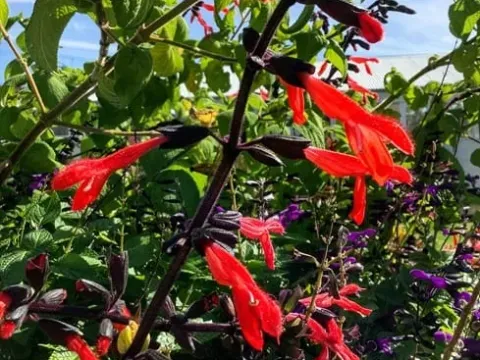
Salvia gesneriflora
Salvia gesneriflora
Salvia gesneriflora is a notable member of the Lamiaceae family, recognized for its dramatic growth habit and vibrant, large red flowers that appear in long, elegant spikes. This perennial shrub is highly valued for its intense visual impact in garden and greenhouse settings.
What the section contains
Salvia gesneriflora
Originating from the mountainous regions of Mexico, this species is naturally adapted to cooler, high-altitude climates. It thrives in environments where temperatures remain moderate and avoids the scorching intensity of direct low-altitude sun.
Successful cultivation requires soil that is well-aerated and possesses excellent drainage capabilities. Due to its mountain origins, the plant does not tolerate waterlogged conditions, which can lead to rapid root decay if not managed correctly.
In terms of climatic demands, the plant performs best in frost-free regions. In colder zones, it is typically managed as a container plant that can be moved indoors or into a glasshouse during the winter months to protect it from freezing temperatures.
Maintenance practices for Salvia gesneriflora include regular pruning after the flowering phase. This encourages a bushier structure and helps the plant redirect energy into root and stem development for the following growth cycle.
Common pests associated with this species include whiteflies and spider mites, which are particularly prevalent in protected cultivation environments with low humidity levels.
Fungal issues, such as powdery mildew and root rot, can compromise the plant's vitality if irrigation management is poor or if the planting site lacks sufficient air movement.
Implementing proper spacing between individual plants is a critical prophylactic measure to ensure adequate ventilation and reduce the risk of localized humidity buildup.
Regular inspection of the foliage is essential to detect pest infestations early. Integrated pest management strategies are recommended to maintain plant health without relying solely on chemical intervention.
In cases of severe infestation, targeted application of appropriate pesticides is necessary, always ensuring that the product is suitable for ornamental crops to avoid phytotoxicity.