
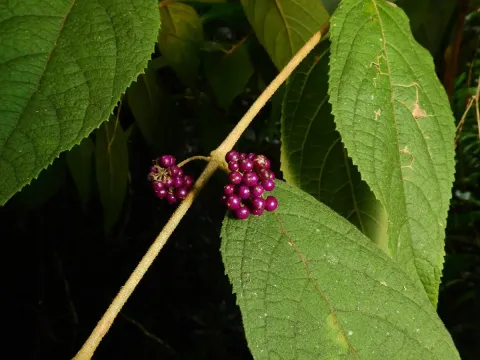
Callicarpa pedunculata
Callicarpa pedunculata
Callicarpa pedunculata, a member of the Lamiaceae family, is typically propagated through seeds or stem cuttings. Seed sowing is performed in late winter in a well-draining seed-starting mix, requiring a period of cold stratification to break dormancy.
What the section contains
Callicarpa pedunculata
Optimal germination occurs at temperatures between 20°C and 25°C. Providing consistent moisture is crucial, but one must ensure that the growing medium does not become waterlogged to prevent fungal issues.
For vegetative propagation, semi-hardwood cuttings are taken during the mid-summer months. These are treated with rooting hormones and placed in a humid environment until roots are established.
Transplanting seedlings or cuttings into their permanent location should be done after the risk of frost has passed. Spacing requirements ensure adequate airflow to reduce humidity-related problems.
Selecting the right site, which offers partial to full sun exposure, significantly contributes to the vigor and reproductive success of the shrub.
This species thrives in fertile, loamy soils that possess excellent drainage capabilities. While it adapts to a variety of soil types, a slightly acidic to neutral pH level is ideal.
Consistent watering schedules are necessary during the establishment phase and periods of prolonged drought. Mulching around the base helps retain moisture and regulate soil temperature.
Although it possesses some tolerance to environmental stressors, protection against severe winter temperatures is often required in temperate regions to ensure survival.
Fertilization with balanced NPK formulas is recommended in early spring to support foliage development and again in mid-summer to promote fruit set.
Pruning is an essential maintenance task. It should be conducted annually to remove old wood, encourage new growth, and maintain a manageable and aesthetically pleasing shrub shape.
Spider mites are common pests that thrive in hot, dry climates, frequently infesting the undersides of leaves and leading to discoloration and premature leaf drop.
Aphid colonies can cause significant damage to tender new shoots. Regular monitoring and the application of insecticidal soaps are effective management strategies.
Powdery mildew represents a significant fungal threat, especially in environments with poor air circulation and high humidity levels during the growing season.
Root rot is a severe condition usually caused by poor drainage or excessive irrigation, which can quickly lead to the decline of the plant's health.
Preventative measures include maintaining proper plant spacing and conducting regular sanitary pruning to remove any plant matter that shows signs of infection or decay.