
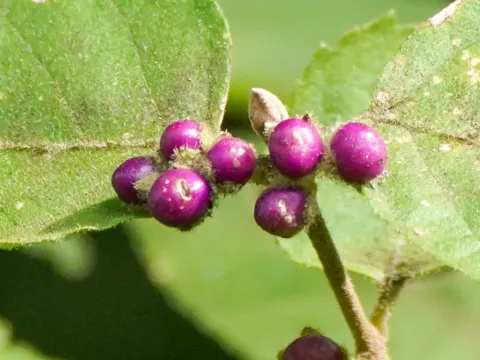
Callicarpa mollis
Callicarpa mollis
Callicarpa mollis, commonly known as soft beautyberry, is a deciduous shrub belonging to the Lamiaceae family. It is native to East Asia, specifically regions within Japan and Korea, where it thrives in diverse temperate forest habitats.
What the section contains
Callicarpa mollis
The plant requires well-drained, fertile soil with consistent moisture levels to reach its full ornamental potential. It performs best when planted in sites that offer protection from harsh winds and provide partial to full sun exposure for healthy foliage development.
Botanically, this species is defined by its pubescent leaves and stems, which give the plant a soft, velvety texture. Its primary appeal lies in the late summer blooms followed by clusters of vivid, glossy violet-purple berries that persist well into the autumn season.
Agronomic management involves regular pruning in early spring to encourage vigorous growth and maintain an attractive, tidy shape. While it demonstrates decent cold hardiness, young specimens may require mulching or additional protection when grown in cooler climates.
In landscape architecture, Callicarpa mollis is used as an ornamental focal point in gardens and shrub borders. Its unique fruit color and structure make it a valuable addition for autumn-interest gardening, though the fruits are primarily for decorative enjoyment.
The primary threats to Callicarpa mollis include fungal pathogens, such as leaf spot and various rots, which often develop in environments with poor air circulation or excessive moisture around the root zone. Ensuring proper drainage is the most effective preventative measure.
Insect pests, including aphids and spider mites, may infest the tender foliage during the spring growing season. Early detection through regular monitoring and the prompt use of horticultural oils or approved insecticides are essential to prevent significant leaf damage.
Root system health can be compromised by poor soil structure or prolonged waterlogging. If the soil remains saturated for extended periods, the shrub may become susceptible to soil-borne pathogens, leading to gradual decline and stunted growth.
In some regions, wildlife such as rodents can damage the bark of the lower stems during the winter months. Protective collars or physical barriers are often recommended to prevent structural harm to the shrub in colder, snow-covered winters.
Nutrient deficiencies, specifically iron chlorosis, can occur if the soil pH is not balanced correctly. Maintaining an slightly acidic to neutral pH is important to ensure the plant efficiently absorbs the necessary nutrients for deep green foliage.