
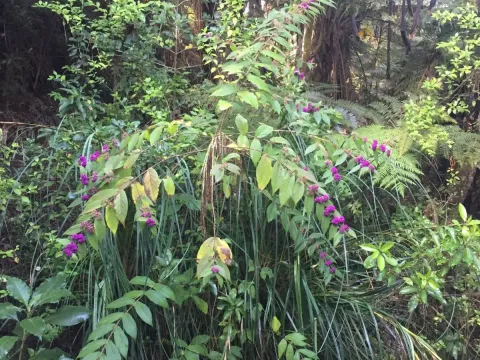
Callicarpa rubella
Callicarpa rubella
Propagation of Callicarpa rubella is typically performed through seeds or semi-hardwood cuttings. Seeds should be sown in late winter and require a cold stratification period to break dormancy and ensure uniform germination in early spring.
What the section contains
Callicarpa rubella
Cuttings are taken during the summer months from new growth that has begun to lignify. These are placed in a well-draining rooting medium and kept under high humidity until strong root systems are developed, ensuring successful establishment.
Belonging to the Lamiaceae family, this species thrives in locations with full sun to partial shade. It demands fertile, humus-rich soil that maintains consistent moisture while ensuring excellent drainage to prevent root saturation.
The shrub is sensitive to extreme cold and performs best in mild climates or protected garden spots. In cooler zones, it is essential to provide deep organic mulch around the base and cover the plant during severe frost events to protect its structural integrity.
Maintenance includes regular irrigation during drought spells to support berry production. Pruning should be carried out in early spring to remove dead or damaged wood and to encourage the growth of new, vibrant branches for the upcoming season.
The plant is occasionally susceptible to fungal infections like powdery mildew, particularly when planted in areas with stagnant air. Maintaining proper spacing and improving airflow through selective thinning are effective preventive measures for the plant's health.
Pest pressures often include sap-sucking insects such as aphids or scale insects. These pests can be managed by regular monitoring and the application of horticultural soaps or systemic insecticides if infestations threaten the vigor of the shrub.