
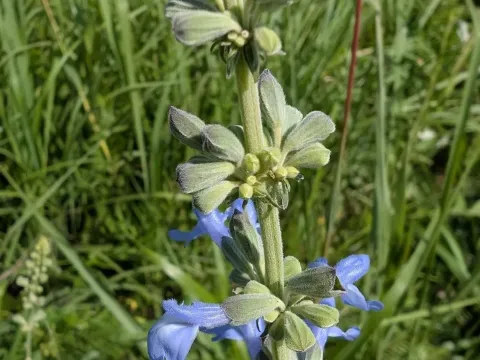
Azure sage
Salvia azurea
Azure sage is typically propagated via seeds sown directly into the soil during mid-spring. The soil should be well-prepared and loosened to a depth of 15 centimeters to allow for optimal root establishment.
What the section contains
Azure sage
For indoor propagation, seeds can be started in trays 6 to 8 weeks before the last expected frost date. A standard seed-starting mix should be kept moist but not waterlogged to ensure successful germination.
The seeds should be sown thinly and covered with a light layer of substrate, as they require a minimal amount of light to initiate the germination process. A consistent temperature of 20 degrees Celsius is ideal.
Once seedlings have developed at least two pairs of true leaves, they can be hardened off and transplanted into their permanent outdoor locations. This gradual acclimatization is crucial for the plant's survival.
Spacing is a vital consideration when sowing or planting; Azure sage can grow quite tall and wide, so providing a spacing of 50 to 60 centimeters between individuals is recommended to prevent overcrowding.
Salvia azurea, a member of the Lamiaceae family, is native to the central and southeastern regions of the United States. It is a hardy perennial adapted to open prairies, grasslands, and rocky, dry environments.
The plant thrives in full sun exposure. It is highly valued for its drought tolerance once established, making it an excellent choice for low-maintenance landscapes and xeriscaping projects across diverse regions.
Soil requirements for Azure sage are specific: it must be well-drained. Sandy or rocky soils are ideal, as heavy clay soils that retain too much winter moisture can lead to root rot and eventual plant failure.
While the plant is hardy and adapts well to various soil pH levels, it performs best in neutral to slightly alkaline conditions. It generally does not require heavy fertilization, as nutrient-rich soil can cause the plant to become leggy.
Regular maintenance involves occasional pruning to encourage a bushy growth habit and prevent the stems from becoming too tall and falling over. This is especially important in regions with high winds or frequent summer storms.
Fungal diseases remain the most significant threat to Azure sage, particularly during humid seasons. Powdery mildew can appear as a white dusting on leaves, often occurring due to poor air circulation around the base of the plant.
Root rot is a common issue linked to poor drainage or overwatering. If the soil remains consistently wet, the roots will suffer, leading to sudden wilting and discoloration of the foliage, eventually killing the plant.
Insect pests such as aphids can congregate on the flower spikes. While minor infestations rarely kill the plant, they can distort growth and reduce the aesthetic value of the blooms during the peak season.
Spider mites are another potential problem in hot, dry weather. These tiny pests suck sap from the leaves, causing them to develop yellow spots and eventually drop, which weakens the overall vitality of the plant.
To mitigate these threats, gardeners should practice good sanitation by removing dead plant debris at the end of the season. This helps in breaking the life cycle of various pathogens and overwintering pests.
Harvesting for floral arrangements should be timed when the flowers are about halfway open on the spike. This ensures the maximum longevity of the stems when placed in water for interior decor.
For medicinal or essential oil purposes, harvesting should take place just as the plant begins its flowering phase. This is when the concentration of secondary metabolites and aromatic compounds is at its highest.
Drying the stems should occur in a dark, well-ventilated area. Hanging the bundles upside down prevents the stems from bending and helps retain the characteristic azure blue color of the petals after they are fully dried.
Cutting the plants back to the base in late autumn or early winter is standard practice. This cleaning process keeps the garden tidy and prepares the root system for a period of dormancy during the colder months.
Once dried, store the plant material in airtight glass or tin containers to maintain its quality. Keeping the product away from direct sunlight and humidity is essential to preserve its aromatic profile for future use.