
Arduin's germander
Teucrium arduini
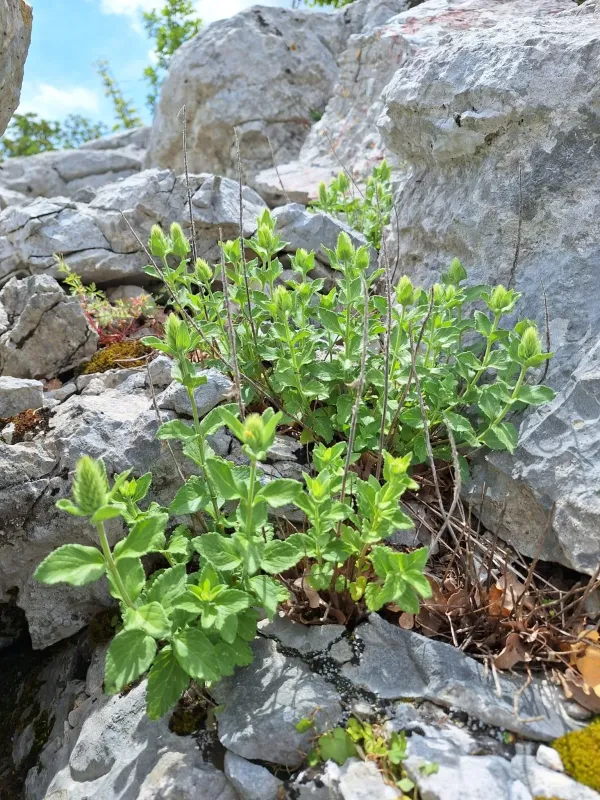
Description
Sowing dates
Arduin's germander is a perennial herbaceous plant, so commercial sowing is typically planned for the spring when soil temperatures reach 10-12 degrees Celsius. Seeds should undergo stratification to significantly improve germination rates in field conditions.
When sowing directly into the ground, it is important to bury the seeds no deeper than 1–2 centimeters, as they are quite small. An optimal planting scheme involves row spacing of 45 to 60 centimeters to facilitate high-quality mechanical maintenance.
In regions with colder climates, greenhouse seedling cultivation is preferred, followed by transplanting into open ground in May. This method allows for a shortened vegetation period and produces stronger plants by mid-summer.
Sowing should be done in well-lit areas, as the crop is highly demanding of sunlight. Overcrowding of crops is unacceptable, as it leads to the development of rot in the lower parts of the stems.
To optimize the propagation process on plantations, a vegetative division method is sometimes applied, carried out either in early spring or in late August after the active flowering period ends.
Growing requirements
The plant belongs to the Lamiaceae family and naturally grows primarily in rocky limestone areas of Southeastern Europe. It possesses high drought resistance, making it a promising crop for arid agricultural regions.
The culture prefers light, well-drained soil substrates with a neutral or slightly alkaline pH. In heavy clay soils, the plant quickly suffers from root rot due to moisture stagnation around the root collar during winter and spring.
The temperature range for successful development is between 18–25 degrees Celsius. Arduin's germander can withstand short-term frosts, but prolonged low temperatures without snow cover can be detrimental.
Moisture supply should be moderate, as excess water leads to fungal diseases. During the active growth stage, it is important to cultivate the soil regularly to ensure oxygen access to the root system.
Mineral nutrition should be balanced, with an emphasis on potassium and phosphorus, which promotes better hardening of shoots before winter and increases the plant's overall frost resistance.
Main diseases and pests
Common pests for this crop include various species of aphids and spider mites, which develop actively during prolonged droughts and high air temperatures.
Root rot is the most dangerous disease, caused by improper irrigation or the use of heavy soils without drainage. Prevention consists of crop rotation and monitoring plant density.
Powdery mildew may also occur during periods of high humidity and poor plantation ventilation. Protective measures include regular thinning of bushes and the removal of plant residues.
Infestations of certain lepidopteran caterpillars can locally reduce green mass yields. On commercial plantations, the use of biological pest control methods is strongly recommended.
To prevent the spread of pathogens, it is necessary to conduct regular inspections of the crops and avoid water stagnation in the furrows, which is a critical factor for the health of this culture.
Harvesting
Harvesting is performed during the peak flowering period when the concentration of essential oils and active biological substances in the aerial part of the plant reaches its maximum.
The harvesting technique involves mowing the stems at a height of 10–15 centimeters from the ground. It is important to use sharp tools to avoid injuring the root collar, ensuring rapid regrowth of new shoots.
After mowing, the raw material must be transported to the drying facility as quickly as possible to avoid self-heating and the loss of aromatic properties. Drying is conducted in shaded, well-ventilated areas.
Yield depends on the age of the plantation, soil type, and seasonal weather conditions. On average, one hectare can produce up to 1.5–2 tons of marketable dry mass when following proper agricultural practices.
After harvesting, it is necessary to fertilize the plants to restore energy before the autumn period, which guarantees stable development of the crop in the next agricultural cycle.