
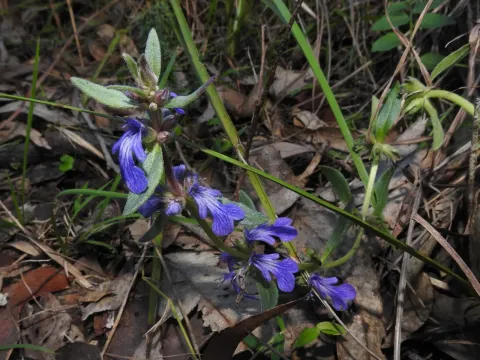
Austral bugle
Ajuga australis
Austral bugle (Ajuga australis) is a hardy perennial herb belonging to the Lamiaceae family. Native to the diverse landscapes of Australia, this plant has adapted to survive in various environments ranging from open woodlands to rocky outcrops. Its resilience makes it a valuable species for ecological restoration and ornamental landscaping.
What the section contains
Austral bugle
Botanically, the plant features basal rosettes of leaves that produce ascending flower spikes, typically reaching up to 40 centimeters in height. The foliage is often pubescent, which serves as a protective mechanism against heat and moisture loss. The inflorescences are characterized by dense whorls of blue to purple flowers that appear throughout the growing season.
The cultural requirements for Ajuga australis involve well-drained, fertile soil and a position that receives adequate light. While the species is drought-tolerant once established, it performs best with consistent moisture levels during its initial growth phase. It is highly adaptable to various soil types, provided that waterlogging is prevented.
Agrotechnical management includes periodic spacing to maintain plant health and prevent overcrowding. While the plant spreads naturally through runners, it is not considered invasive in typical garden settings if managed correctly. Mulching around the plants can help retain soil moisture and prevent competition from opportunistic weed species.
In terms of хозяйственное использование, this plant is primarily utilized in horticulture as a robust ground cover. It is particularly effective for slope stabilization and erosion control, as its root system helps bind the soil effectively. Additionally, its aesthetic appeal makes it a popular choice for rockeries, borders, and meadow-style garden designs.
The primary threats to this culture are fungal diseases, particularly crown and root rot, which are often exacerbated by poor drainage and excessive humidity. Pest management focuses mainly on controlling slugs and snails, which can feed on the tender foliage. Maintaining proper airflow and avoiding overhead irrigation in stagnant conditions helps to mitigate these issues.