
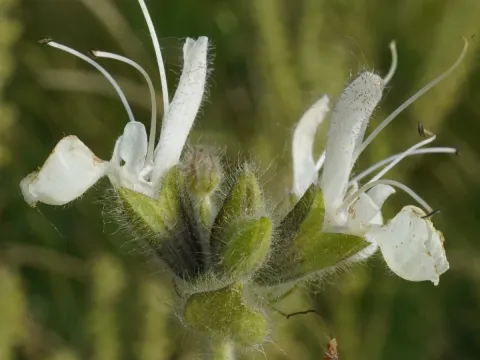
Austrian sage
Salvia austriaca
Austrian sage (Salvia austriaca) is a perennial herbaceous plant from the Lamiaceae family. It is typically propagated by seeds, which require proper soil moisture and temperature for successful germination.
What the section contains
Austrian sage
Sowing is best performed in early spring or late autumn to allow the seeds to undergo natural stratification. Seeds should be planted at a shallow depth, ensuring they are only lightly covered with fine soil.
In field production, row planting with spacing of approximately 50–60 cm is recommended. This setup facilitates proper plant development and ensures sufficient air circulation between individual specimens.
When starting from seedlings, transplanting should be done carefully to avoid damaging the taproot system. Once established, the plants form a sturdy rosette that persists through the growing season.
The plantation can remain productive for several years if managed correctly. Regular soil cultivation around the rows is essential for suppressing competing weeds, especially during the establishment phase.
This species is highly adapted to sunny and dry habitats. It exhibits significant drought tolerance, making it an excellent candidate for regions with irregular rainfall patterns and well-drained soils.
Austrian sage prefers calcareous, light-textured, and nutrient-rich soils. While it is not particularly demanding regarding fertility, incorporating organic matter before planting promotes more vigorous growth.
The plant is highly winter-hardy and thrives in temperate climates. It is well-suited for open environments where it can receive maximum sunlight, which is critical for its metabolic processes.
Water requirements are relatively low once the plant is fully established. Excessive irrigation should be avoided, as it can lead to root system decay and negatively impact the overall health of the plant.
Proper site selection is crucial; avoid low-lying areas where water might pool. A slope or elevated area with excellent natural drainage provides the optimal environment for long-term cultivation.
Powdery mildew is the most common fungal disease affecting Austrian sage, usually occurring in conditions of high relative humidity and poor air movement. Proper spacing remains the primary preventive measure.
Root rot caused by fungal pathogens can affect the plants if soil aeration is compromised. Keeping the surface of the soil loose and dry helps prevent these conditions and maintains plant vigor.
Pests such as aphids and leaf-eating beetles may occasionally inhabit the foliage. Integrated Pest Management (IPM) strategies, including biological controls, are highly recommended for sustainable farming.
To maintain a healthy crop, growers should remove any diseased foliage immediately upon detection. This prevents the spread of pathogens throughout the plantation during the active growing season.
Sanitation practices, including the removal of dead plant material in autumn, significantly reduce the incidence of pests and diseases in subsequent years, ensuring a healthier crop cycle.