
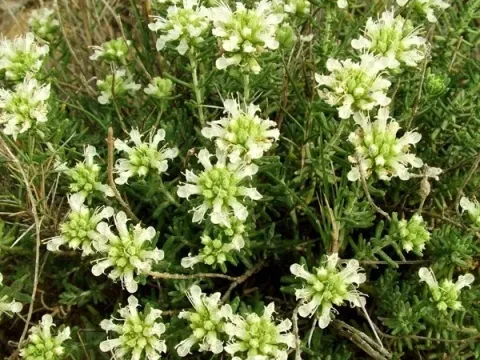
Aragon germander
Teucrium aragonense
Aragon germander (Teucrium aragonense) is a perennial herbaceous plant belonging to the Lamiaceae family. It typically forms dense, low-growing subshrubs characterized by their aromatic foliage and strong structural resilience in harsh Mediterranean climates.
What the section contains
Aragon germander
Native to the arid regions of Spain, this plant is well-adapted to rocky, limestone-based habitats. It naturally occurs in environments characterized by thin soils, high sun exposure, and significant seasonal fluctuations in rainfall, making it an excellent candidate for xeriscaping.
The cultural requirements for this plant focus on full sun exposure and superior drainage. It thrives in sites where heat builds up and air circulation is constant, as the plant is highly susceptible to fungal issues caused by stagnant humidity or poor soil aeration.
Soil structure is critical for the success of Teucrium aragonense. A neutral to slightly alkaline pH is preferred, combined with a substrate enriched with coarse grit or gravel. This mimicks its native scree slopes, preventing root rot and ensuring the plant remains healthy throughout the winter months.
In terms of agricultural and horticultural use, Aragon germander serves as an ornamental groundcover and a staple in rock gardens. Its ability to withstand extreme dry conditions makes it highly valuable for sustainable landscape projects that require minimal irrigation and low maintenance inputs.
The most significant threats to the crop are fungal pathogens resulting from poor drainage. Root and crown rot are the primary causes of plant loss, particularly during late autumn and winter if the soil remains waterlogged for extended periods.
Insect pests are generally uncommon due to the presence of secondary metabolites and essential oils that serve as natural deterrents. However, in poorly ventilated greenhouses or dense garden clusters, spider mites may occasionally emerge during prolonged heat waves.