
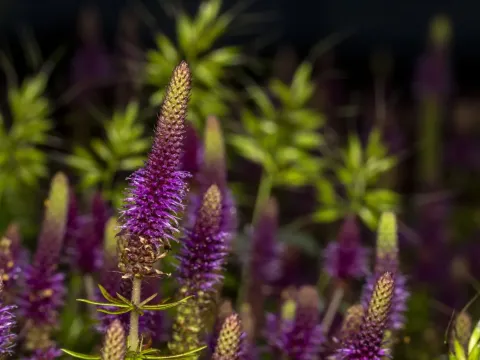
Pogostemon deccanensis
Pogostemon deccanensis
Pogostemon deccanensis is a perennial aquatic species belonging to the Lamiaceae family. Native to the Deccan Plateau in India, it thrives in wetland habitats and marshy environments, making it a highly sought-after plant for advanced aquascapers.
What the section contains
Pogostemon deccanensis
This plant has high light requirements. To maintain its characteristic needle-like foliage and vibrant green color, intense lighting is necessary. If the light intensity is insufficient, the plant will become leggy, and its lower leaves may prematurely yellow or decay.
Temperature management is critical for optimal growth, with the ideal range being between 22 °C and 28 °C. Providing supplemental CO2 is almost mandatory to ensure vigorous growth and to prevent the plant from becoming stunted or losing its structural integrity.
The substrate should be rich in nutrients, as Pogostemon deccanensis relies heavily on its root system to uptake minerals. Using a specialized aquatic substrate designed for planted tanks will yield significantly better results compared to inert sand or gravel.
In terms of aquascaping, it is an excellent candidate for mid-to-background placement. Its unique whorled leaf arrangement allows it to create dense, textured clusters that add depth and visual complexity to tropical freshwater aquarium layouts.
Algae infestations represent the primary biological threat to Pogostemon deccanensis. Due to its delicate leaf structure, it is particularly susceptible to being smothered by hair algae or thread algae, which compete for light and nutrients in the water column.
Nutrient imbalances, particularly iron deficiency, often lead to chlorosis. This condition manifests as yellowing of the new shoots, signaling the need for precise micro-nutrient dosing to restore the plant's health and typical deep coloration.
Poor water circulation within the aquarium can lead to stagnant zones where waste accumulates. This organic buildup often results in root rot, which is difficult to reverse once the damage to the rhizome or root system becomes extensive.
Environmental stress caused by rapid fluctuations in water parameters, such as pH or general hardness (GH), can trigger sudden leaf drop. Maintaining a consistent aquarium environment is essential for the long-term survival of this sensitive species.
While typically grown submerged, those cultivating it in emersed setups must be vigilant against common greenhouse pests like aphids. Immediate intervention with biological controls is necessary to save the foliage from rapid insect damage.